To successfully beat the timer in dungeons, you need to know how to Tank in Fellowship. Tanking requires not only pulling mobs, but also managing threat and mitigating unnecessary damage. In this guide, you will learn about Fellowship tanking basics, tips and tricks, and mechanics.
How to Tank in Fellowship Key Takeaways:
- Fellowship Tanks are the leaders of the group who know the route and pull the mobs to let the rest of the team deal damage.
- To keep threat on a Tank in Fellowship, you should pull mobs first, use the strongest skills to generate more threat, and use taunts when losing it.
- The best tank to play in Fellowship depends on your playstyle: Helena is a safe pick with strong mitigation, while Meiko is a fast-paced option for more experienced players.
- For good positioning in Fellowship, always face enemies, keep their abilities away from the group, and group mobs tightly for easier AoE hits.
 4.9
4.9Fellowship Tanking Basics
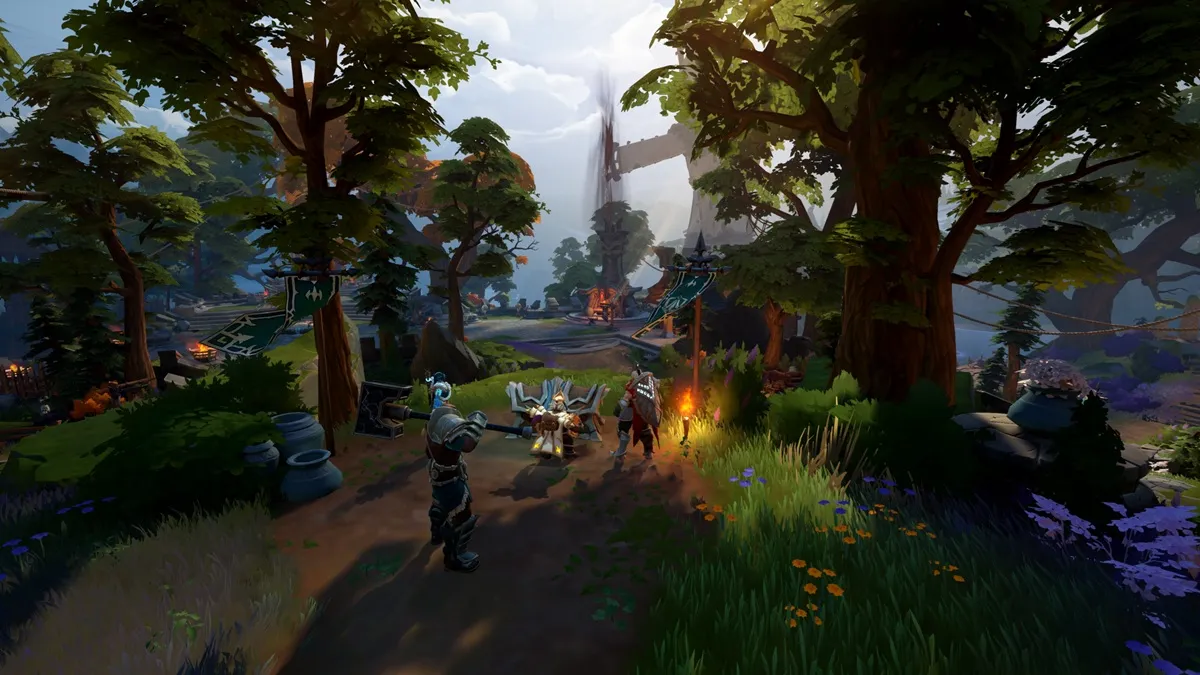
The role of a Fellowship Tank is to lead the group forward, take the damage of enemy attacks, and position mobs so DPS can deal maximum damage without putting themselves at risk. Without a tank keeping control of the fight, healers and DPS will quickly get overwhelmed, and the group may wipe.
What should Fellowship Tanks know? Every dungeon in Fellowship runs on a timer, and it’s the Tank’s job to make sure the group finishes in time. Most of this comes down to pull size. Smaller pulls are safer but consume more time, while larger pulls speed up the run but raise the chance of a wipe.
Another key responsibility is leading the party. Tanks are expected to know the route, time their interrupts, and position enemies properly. This lets the group focus on their job without looking for the right way to go.
In Quickplay matches, however, tanking is easier, as you have less pressure from timers or gear. This mode allows you to get used to the game, learn new heroes and roles, or earn some tokens. If you want to skip quicklplays and still earn Quartermaster Tokens, our team is ready to help.
Fellowship Tank Threat Management
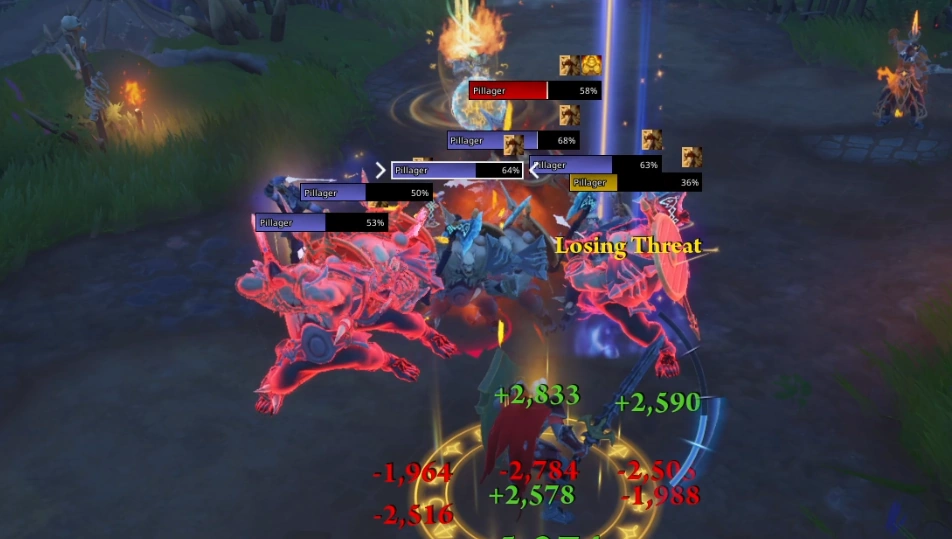
First thing to remember for Tanks in Fellowship is that threat decides who enemies attack. The player with the most threat becomes the target; thus, Tanks generate 350% more threat than other roles to keep the enemy focused. But having a higher threat-generation rate is not enough, so you also need to know how to manage threat. Here are a few threat management tips for tanks in Fellowship:
- Start every pull yourself. Running in first gives you a burst of threat and makes enemies focus on you right away.
- Secure with AoE. Use area skills early so the whole pack sticks to you before DPS opens up.
- Track enemy bars. Blue means you hold aggro, yellow means you’re losing it, red means another player has it.
- Use Taunt smartly. If someone pulls aggro, hit Taunt to instantly return to the top of the threat list.
The simplest way to secure threat is to start the pull yourself. Running in first gives you an initial burst of threat, and following up with an AoE skill locks it down. If you chain-pull into the next group, keep using threat abilities to keep the threat on yourself.
Sometimes, DPS players will outgear you and deal so much burst damage that they pull enemies off you. In those cases, every tank has a Taunt ability. Taunt forces enemies to attack you for a short time. It’s a short-term solution, and in such cases, you need to pay more attention to mobs whose HP bar turns yellow.
No matter the situation, always pay attention to the enemy’s health bar colors. Blue means you keep threat on yourself, yellow means you are losing it, and red means you have lost it and the mob attacks another party member. React quickly when bars turn yellow or red, and your run will stay stable.
Which Tank to Play in Fellowship

How to choose a Tank in Fellowship? Right now, Fellowship has two tank heroes, Helena and Meiko, and each of them plays differently. Both can clear content, but the choice depends on how you like to play:
- Helena is the classic “sword and shield” tank. She focuses on toughness and damage resistance. Her combos reduce cooldowns, letting her keep defenses active for longer fights. She’s the safer pick if you prefer strong mitigation and a steady pace.
- Meiko is a monk-style tank. Instead of stacking defense, she relies on combos and finishing moves that provide self-healing. Meiko plays faster and rewards aggressive pulls, but needs more practice to master.
If you’re new to tanking in Fellowship, Helena is easier to start with. If you want a more active playstyle with self-sustain, Meiko can be the better choice. In any case, you can choose whoever you like and test a hero in a quickplay match to see whether you like it or not. Alternatively, if you feel you are ready to jump into high-level runs, we can level your RIO to the desired rank really fast.
Fellowship Tank Positioning
Positioning is one of the most important skills for tanks in Fellowship. You need to keep enemies grouped, face them toward you, and make sure your party has space to deal damage safely. Bad positioning leads to unwanted deaths from healers and DPS, wasted AoE damage, and extra pressure on the healer. To make it easier for you to understand positioning, here’s a quick checklist for Tank positioning in Fellowship:
- Always face enemies. You can’t block or parry if they are behind you.
- Stand opposite your team. Keep frontal cleaves and AoEs away from allies.
- Group mobs tightly. Drag melee into ranged and casters so AoE hits everything.
- Use kiting if needed. Move in circles when you’re out of cooldowns to survive.
Once you have the basics of positioning down, focus on Fellowship Tank movement. Strafing while keeping enemies in front is safer than turning your back. Additionally, many mobs try to teleport or get behind you, so try to strafe sideways quickly to help put them back in line.
Remember also to position mobs with your group in mind. If you stack enemies together, DPS can drop big AoEs more effectively. Casters can be silenced and dragged, while ranged mobs usually need line-of-sight tricks to move. If a Tank knows how to place each type of mob, it saves a lot of time and helps to beat the timer in Fellowship.
And finally, don’t forget the survival movement — kiting and running, or mindful repositioning. When your cooldowns are gone, kiting in a controlled circle gives healers time to recover while enemies chase you. Just stay aware of other packs, so you don’t drag extras into the fight.
Fellowship Tank Mechanics
Every Fellowship Tank relies on a set of core mechanics to survive and control fights. These mechanics define how you reduce damage, hold enemies, and support your group. It’s essential for Tanks to know them well, as it makes the difference between a smooth dungeon and a quick wipe. Core Tank Mechanics in Fellowship are:
- Threat generation — keeping enemies focused on you.
- Damage mitigation — using cooldowns and passive tools to reduce incoming hits.
- Positioning and movement — facing enemies, grouping them, and avoiding extra damage.
- Interrupts and crowd control — stopping dangerous spells and managing casters.
- Enemy grouping — pulling melee, ranged, and casters into one stack for AoE.
Fellowship Tank Interrupting Casts
Enemies in Fellowship use various spells that can be interrupted to avoid massive damage. Spells with a yellow cast bar are kickable, and every hero has an Interrupt for them. Early on, only the most powerful spells are worth interrupting, but on higher difficulties, you should kick even filler spells to avoid unnecessary damage.
✏️ A successful kick locks the target out for 4 seconds (boss timers are separate).
To successfully interrupt the enemy’s spellcasting, use the game’s interrupt marker. Target an enemy and press V to show the party who you’ll kick. This makes callouts clear and avoids doubled kicks leading to cooldown waste.
Sometimes a cast can’t be kicked and has a grey cast-bar. In this case, switch to crowd control. Stuns and forced movement will stop the cast, but they don’t apply the 4-second silence and only work on CC-able enemies.
Practical cast interrupting priorities for Tanks in Fellowship:
- Call targets: mark the next kick and count down so DPS can cover the following one.
- Kick danger first: stop hard-hitting or party-wide casts; treat fillers as high priority on tougher keys.
- Use CC as backup: if a kick is down or the bar is grey, stun or displace to break it.
- Remember tank uptime: your kick usually comes up fastest, so expect to catch the most.
Fellowship Tank Damage Mitigation
A good Fellowship Tank knows how to use damage mitigation tools to survive. Both Helena and Meiko have constant defensive effects, but these alone won’t keep you alive in bigger pulls or boss fights. Active cooldowns are what carry you through high-damage moments.
Every tank has two types of damage mitigation: short and long. An example of short mitigation can be Helena’s Shields Up or Meiko’s Stone Shield. These reduce incoming hits during normal pulls. But for larger pulls, both heroes also bring stronger long-cooldown defenses such as Iron Wall or Twin Souls: Bulwark.
Keep in mind that mitigation must be used in anticipation of damage, not as a panic button. Press it strategically, not when your HP drops low. It helps to keep the fight under control and take the load off the healer. Additionally, many Tanks make this common error: stacking multiple cooldowns at once. Most fights don’t require that much power together; spreading them out keeps you alive longer.
In fact. Gear ILvl also play an essential role in damage mitigation. The better your gear is, the higher the chance that you will survive an attack. If you need to level up your ILvl, ask our professional players to do it for you and skip this boring grind.
Fellowship Tank Enemy Grouping
Grouping enemies properly is one of the most important tank jobs in Fellowship. When mobs are stacked together, AoE from your DPS hits harder, fights end faster, and healers spend less time and mana. It’s important to know Fellowship enemy types and behavior to know how to group them:
- Melee mobs always follow you wherever you move.
- Casters act like ranged while casting, but move into melee if interrupted.
- Ranged mobs stay at a distance and only move if they lose line of sight.
Here’s how to group enemies in Fellowship:
- Drag melee into ranged and casters. Stand past the ranged mobs so melee naturally stack on top of them.
- Interrupt spellcasters. Interrupting silences them for 4 seconds, forcing them to move with the group.
- Handle ranged with tricks. Use forced movement skills like Cyclone or Grand Melee, or break the line of sight with walls and pillars to make them reposition.
- Chain pulls smartly. When dragging enemies into the next pack, make sure your healer can keep up.
Both tanks have tools to help with grouping. Helena’s Grand Melee pulls everything into her, while Meiko’s Cyclone interrupts and drags mobs together. Use these abilities to set up stacks for your party and let DPS kill them quickly.
How to Tank in Fellowship FAQ
If you have any questions left about Fellowship Tanking, check our FAQ section. Here, we’ve gathered all the frequently asked questions and answered each of them.
What is the Main Role of a Tank in Fellowship?
Tanks manage enemy threat, take damage, and guard the party. They also map out dungeon route, control interrupts, and position mobs to maximize AoE.
How is Threat Managed in Fellowship?
A: Threat decides whose enemies attack. Tanks generate 350% threat over any other role. Pull first, AoE to lock up, and Taunt in case a DPS steals aggro.
Is Helena or Meiko Better in Fellowship?
They are both fine. Helena is more defensive and cooldown-oriented, so she’s suitable for new players. Meiko offers self-healing and faster combo-based gameplay, but requires more accuracy.
When to Use Defensive Cooldowns in Fellowship?
Use them prior to massive damage, and not as an instant heal. Trade cooldowns over stacking, and save ultimates for massive pulls or situational strategies.
How to Position Enemies As a Tank in Fellowship?
Have mobs face you and away from your group, group melee together with ranged/casters, and kite once you are out of defensives. Utilize walls or skills to get ranged enemies to move.
How to Interrupt Spellcasting As a Tank in Fellowship?
Yellow cast bars can be kicked. Everyone has one, but tanks have the shortest cooldowns. Grey bars cannot be kicked but can be interrupted by CC, like stuns or Cyclone.
I Keep Dying As a Tank in Fellowship. What to Do?
You die in the process of learning. Check if you missed a cooldown, pulled too aggressively, or lost aggro. Every mistake tells you where to improve, and eventually you’ll naturally know what you can and cannot do.
4.9Now that you know how to tank in Fellowship, you can start testing these tips and knowledge in the game. It will take time to master all the mechanics, but it’s totally worth it. Don’t forget to position mobs correctly, interrupt spellcasting, and use your defensives strategically to evade tons of damage.
