Path of Exile 2 currency slightly differs from any traditional in-game gold or credits you might be used to. Instead of having just one universal form of money, PoE 2 uses a series of orbs, shards, and scrolls. Each has distinct uses that often serve multiple functions. With our PoE 2 Currency Guide, you will learn about all the types of PoE 2 currencies, how to use them, and where to get PoE 2 currency in the most efficient way possible. Diving into this guide will help you get the best gear stats, allow character optimization, and learn everything important for successful endgame progression in Path of Exile 2.
Path of Exile 2 Currencies Key Takeaways:
- PoE 2 currency uses orbs, shards, and crafting materials instead of simply gold. While gold does exist in PoE 2, it cannot be traded with other players, meaning that it is strictly a personal currency, while player trading is performed without it.
- Different currencies are used for crafting, upgrading gear, trading, and endgame progression.
- Patch 0.5.0 added new Alloy currencies, Verisium Metal, and several crafting updates.
- Delirium, Breach, Ritual, and Atlas systems are some of the best ways to farm currency.
- Mirror of Kalandra, Divine Orbs, Exalted Orbs, Chaos Orbs, and Vaal Orbs are some of the most important currencies in the game.
- Using loot filters, Atlas passives, and bulk trading helps earn currency faster.
Several old PoE 1 currencies were removed or changed in PoE 2.
 4.9
4.9Path of Exile 2 Currency Overview

Currency in Path of Exile 2 is more than just coins or trading chips; it’s the backbone of crafting, upgrading gear, and powering up your character. Each type of currency serves a purpose, from simple orbs that reroll item stats to rare currencies that can transform your endgame builds. In this overview, we’ll break down the main types of currency. To learn about farming PoE 2 Gold specifically, check out our dedicated guide.
We can outline the major Path of Exile 2 currency types by their use cases and purposes. Generally, all currencies can be divided into two basic categories: Orbs and Other Types of PoE 2 currency.
| Orbs | Other Сurrencies |
|---|---|
| Chaos Orb | Mirror of Kalandra |
| Divine Orb | Hinekora’s Lock |
| Orb of Alchemy | Gemcutter’s Prism |
| Orb of Chance | Arcanist’s Etcher |
| Orb of Transmutation | Armourer’s Scrap |
| Vaal Orb | Blacksmith’s Whetstone |
| Regal Orb | Bronze / Silver / Gold Keys |
| Orb of Annulment | Gold |
| Artificer’s Orb | Scroll of Wisdom |
| Exalted Orb | Glassblower’s Bauble |
| Orb of Augmentation | Verisium Metal |
| Lesser Jeweller’s Orb | — |
| Greater Jeweller’s Orb | — |
| Perfect Jeweller’s Orb | — |
📌 Currencies are actively changing throughout Early Access, and we are updating this guide accordingly. The current version of the guide reflects all currencies as of Patch 0.5.0.
Whether you’re looking to build a powerful character to explore Atlas, craft top-tier gear, or simply trade for valuable items, knowing how to farm currency and how to use it is essential. Currency drops throughout the game, but efficient farming and using vendor recipes, loot filters, and other methods can help you build up a stash faster. Let’s take a look at what makes currency so crucial and explore some effective ways to get Currency in PoE 2. Alternatively, we can get you any PoE 2 Currency without you having to grind for it yourself!
PoE 2 Currency Changes
Path of Exile 2 patch 0.5.0 added several currency changes focused on crafting, trading, and stash quality-of-life. The update introduces new Alloy crafting currencies, improves the Currency Exchange, and makes Expedition trading easier. Many of these changes help reduce inventory management and make crafting systems easier to use.
Most Important PoE 2 Currency Changes:
- Added 13 new Alloy currency items from Remnant encounters after Farrow’s Act 2 quest.
- Alloy currencies replace an existing modifier with a new crafted modifier, similar to Perfect Essences.
- Fate of the Vaal currency items now stack up to 5,000 in Currency Stash wildcard slots.
- You can now use currency directly from your stash when buying from Expedition Vendors.
- Several Expedition currencies were removed from the Currency Exchange.
- Legacy Expedition currencies can now be sold to vendors for Gold.
- Players can now set Favourite trades on the Currency Exchange.
- Controller players can now swap applied currency more quickly.
- The Currency Exchange UI was improved for controller support.
If you want to learn more about changes in PoE 2 patch 0.5.0, check out our dedicated Return of the Ancients Overview here at Overgear!
PoE 2 New Currencies in 0.5.0
Path of Exile 2 patch 0.5.0 adds several new currency items tied to the Remnant system. Monsters raised by Remnants can now drop Verisium metal, a new currency material connected to the updated crafting systems introduced in the patch.
The update also adds 13 new Alloy currency items that players can unlock through Remnant encounters after completing Farrow’s quest in Act 2. These Alloy currencies work similarly to Perfect Essences by replacing an existing modifier on an item with a new crafted modifier. This gives players more ways to customize gear and target specific item upgrades through crafting.
📌 We will update this guide as soon as more information about these currencies becomes available.
How to Get More PoE 2 Currency
Path of Exile 2 is set to keep many of the classic currency farming strategies from the previous game. Let’s take a look at the best strategies for farming and earning PoE 2 currency to boost you on your way to building up your wealth.
- Speed Through the Acts and Get to Maps. If you’re starting a new League, rush through the Acts. Getting to maps quickly is the first big step in earning more currency.
- Maximize the Atlas Passive Tree. The Atlas passive tree is a game-changer for boosting currency drops. Customize it to focus on the content you enjoy.
- Fortresses and Masters of Atlas: Fortresses are special maps that give Atlas Tree points when cleared. Masters of Atlas let you add map modifiers that change rewards, including boosting currency drops.
- Breach: Breach starts unstable and becomes stronger as you kill enemies inside it. When it stabilizes and ends, it can spawn stronger monsters or a boss with better currency rewards.
- Delirium: Delirium farming now has fixed spawn points that make currency routes easier to plan, and strong boss damage is needed because bosses often appear during fog runs, which is a great way to earn currency without focusing only on peak efficiency.
- Rituals: This method gives Tribute that can be exchanged for Omens, uniques, and high-value rewards. It becomes much better after investing in Atlas passives that improve reward quality and reroll options.
- Use a Loot Filter That Matches Your Progress. A good loot filter is essential in Path of Exile 2, especially when you start running maps. The right filter saves you time and helps you catch valuable drops without clutter.
- Sell Leveling Uniques Early in the League. Leveling Uniques are hot items at the start of a League. You can get any Unique items from us, such as Headhunter, which is great for Speedfarm.
- Bulk Sell for Better Profits. Got a stash full of expensive items? Don’t sell them one by one — bulk buyers often pay more just for the convenience of getting a bunch at once.
- Sell Crafted Items for a Profit. Crafted items are popular among players, especially early on. If you are not confident in your crafting skills, you can use our Gear Crafting service.
- Farm and Sell Essences. Essences are a go-to source of currency, and farming them is simple. Higher-tier essences, like Perfect Essence, are especially valuable and sell fast, particularly at the beginning of a League.
- Try Currency Flipping. Keep an eye on currency prices and buy low to sell high. Currency flipping is a reliable way to grow your stash if you’re savvy with the market.
PoE 2 Orbs
In Path of Exile 2, currency farming revolves around orbs, with Chaos Orbs and Divine Orbs ranking as two of the most essential. These orbs fuel the economy, providing powerful crafting options and critical trading leverage. Here we have prepared a list of all Orbs — the most important type of PoE 2 currency:
| Currency | Rarity | Use | Location |
|---|---|---|---|
| Chaos Orb | Uncommon | Reroll all modifiers on an item | Random drop |
| Divine Orb | Very Rare | Randomize the numerical values of an item’s modifiers | High-level content drop |
| Orb of Alchemy | Uncommon | Upgrade an item to Rare with 4 modifiers | Mid-level content drop |
| Orb of Chance | Very Rare | Upgrade an item into a Unique or destroy it | Disenchanting Uniques, random drop |
| Orb of Transmutation | Very Common | Upgrade a normal item into a magic one with 1 modifier | Common drop |
| Vaal Orb | Fairly Common | Modifies an item unpredictably and corrupts it | Trial of Chaos, random drop |
| Regal Orb | Common | Upgrades a Magic item into a Rare item, adding 1 modifier | Disenchanting Rares, random drop |
| Orb of Annulment | Very Rare | Remove a modifier from an item | High-level content drop |
| Artificer’s Orb | Uncommon | Add a Rune Socket to a Martial weapon or Armour | Salvaging socketed items |
| Exalted Orb | Common | Add a random modifier to a Rare armor | Rare drop, world bosses |
| Orb of Augmentation | Very Common | Add a second modifier to a Magic item | Common drop |
| Jeweller’s Orb | Rare | Adds a Support Gem Socket to a Skill Gem | Random drops, disenchanting items |
📌 Trade values of each orb fluctuate throughout the league, so we do not list them directly.
Below, we have also prepared a detailed explanation about what each PoE 2 orb does and how rare it is to find.
Chaos Orb
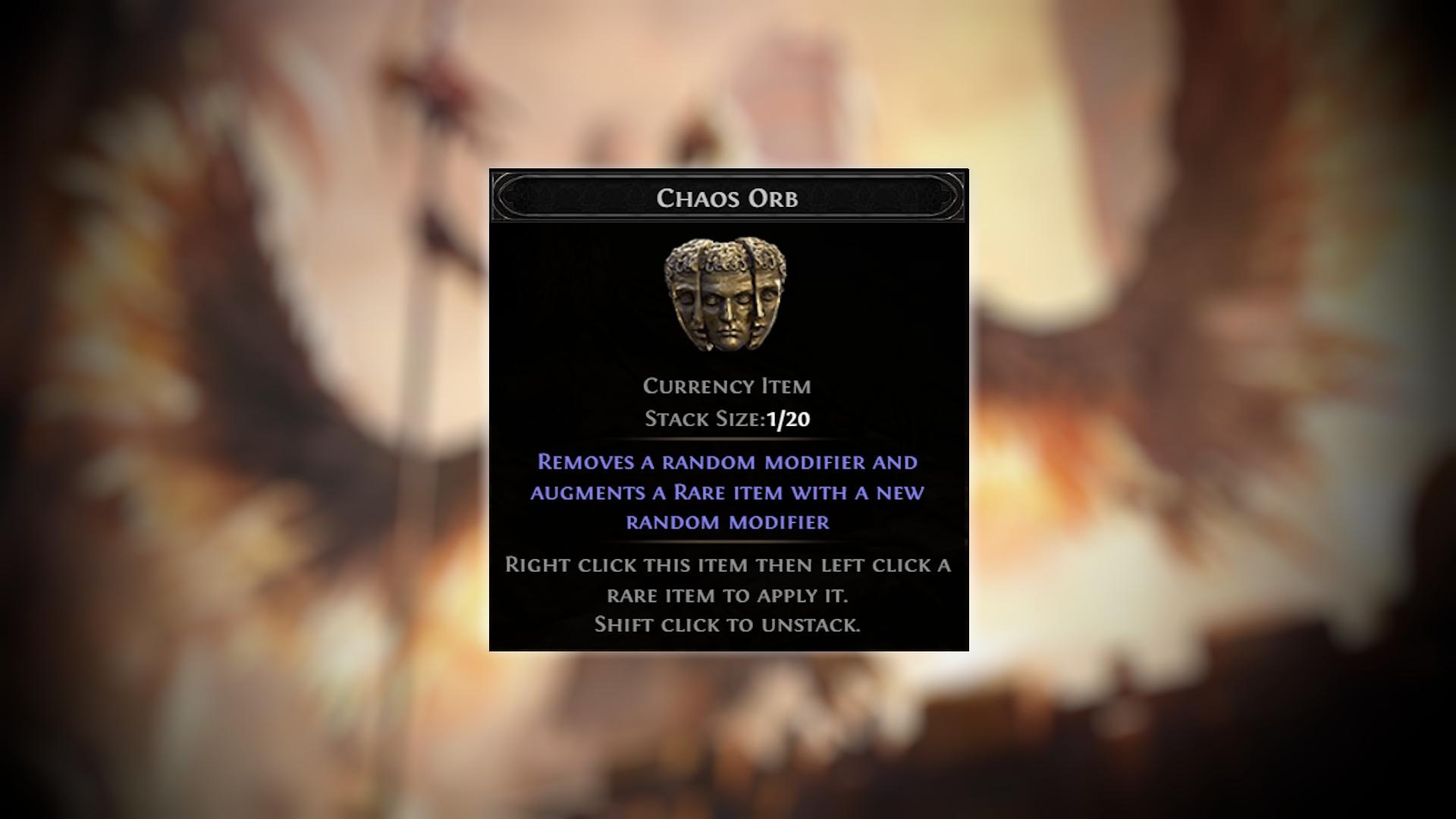
Rarity: Uncommon.
Uses: You can use Chaos Orbs as a gamble to possibly massively improve an item if you have an item. Chaos Orb gives you a chance to remove one of the bad modifiers to replace it with a good one. This should be used very sparingly, and with caution, especially during the campaign. Don‘t gamble on items you‘re using, in case the Chaos Orb removes a good modifier and replaces it with a bad one-just save your Chaos Orbs for average items that have a chance to turn into gigantic upgrades should you get lucky. If you don’t want to farm them yourself, we can provide any amount of Chaos Orbs to help you save time.
Divine Orb
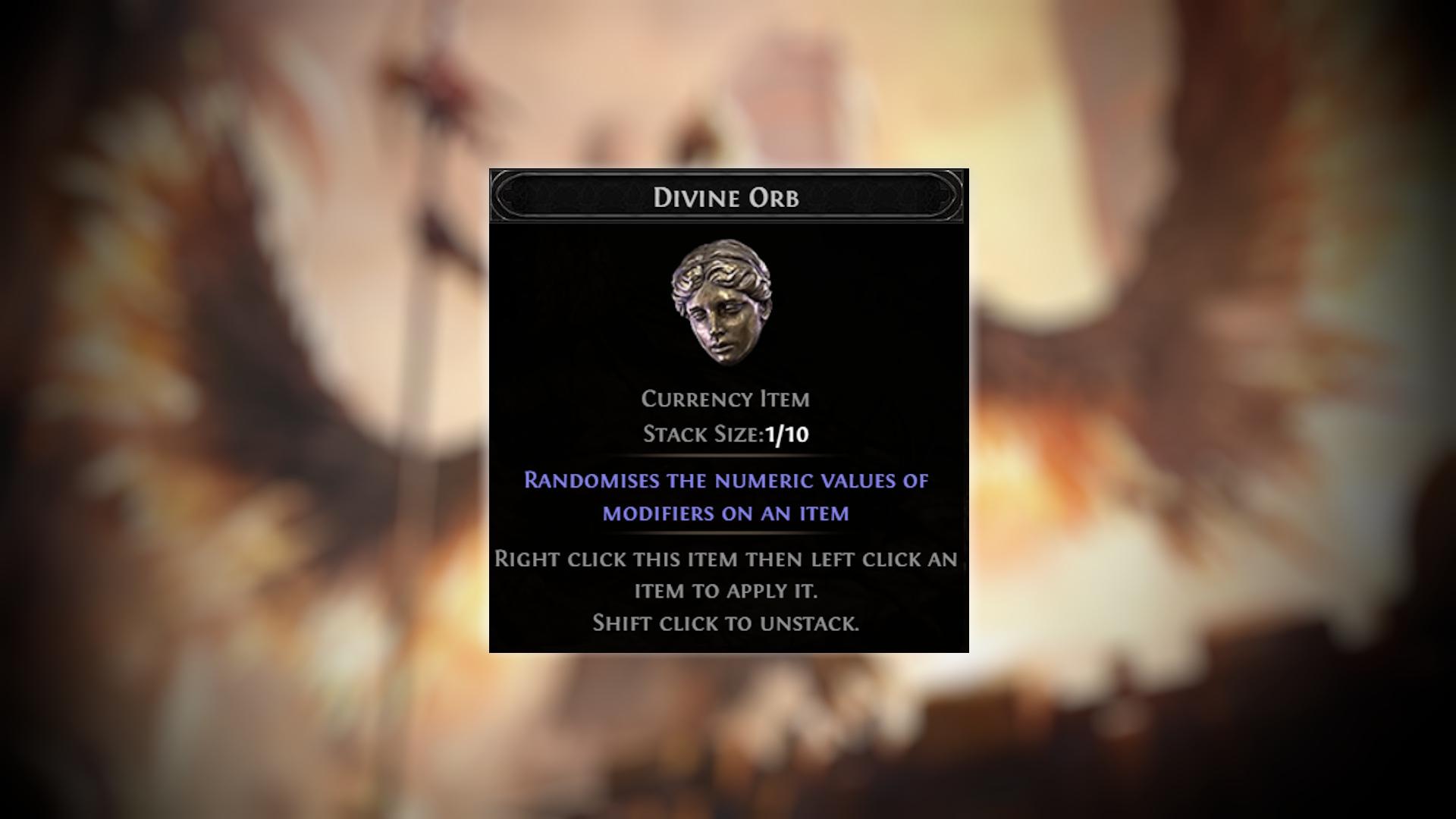
Rarity: Very Rare.
Uses: Divine Orbs are a currency item used to randomize the numerical values of an item’s modifiers. This process may improve the quality of the modifiers. For instance, if a Unique item has a modifier ranging from +1% to +5% to Maximum Resistances, and your item currently has +1%, using a Divine Orb allows you to reroll that value, along with all other modifiers that have value ranges on that item, potentially resulting in higher stats.
Due to the extreme rarity of Divine Orbs, you should be cautious when using them. Only use a Divine Orb if an item has significant potential to benefit from better modifier rolls; otherwise, it is better to save it. We can provide you with any quantity of Divine Orbs to save you time.
Orb of Transmutation
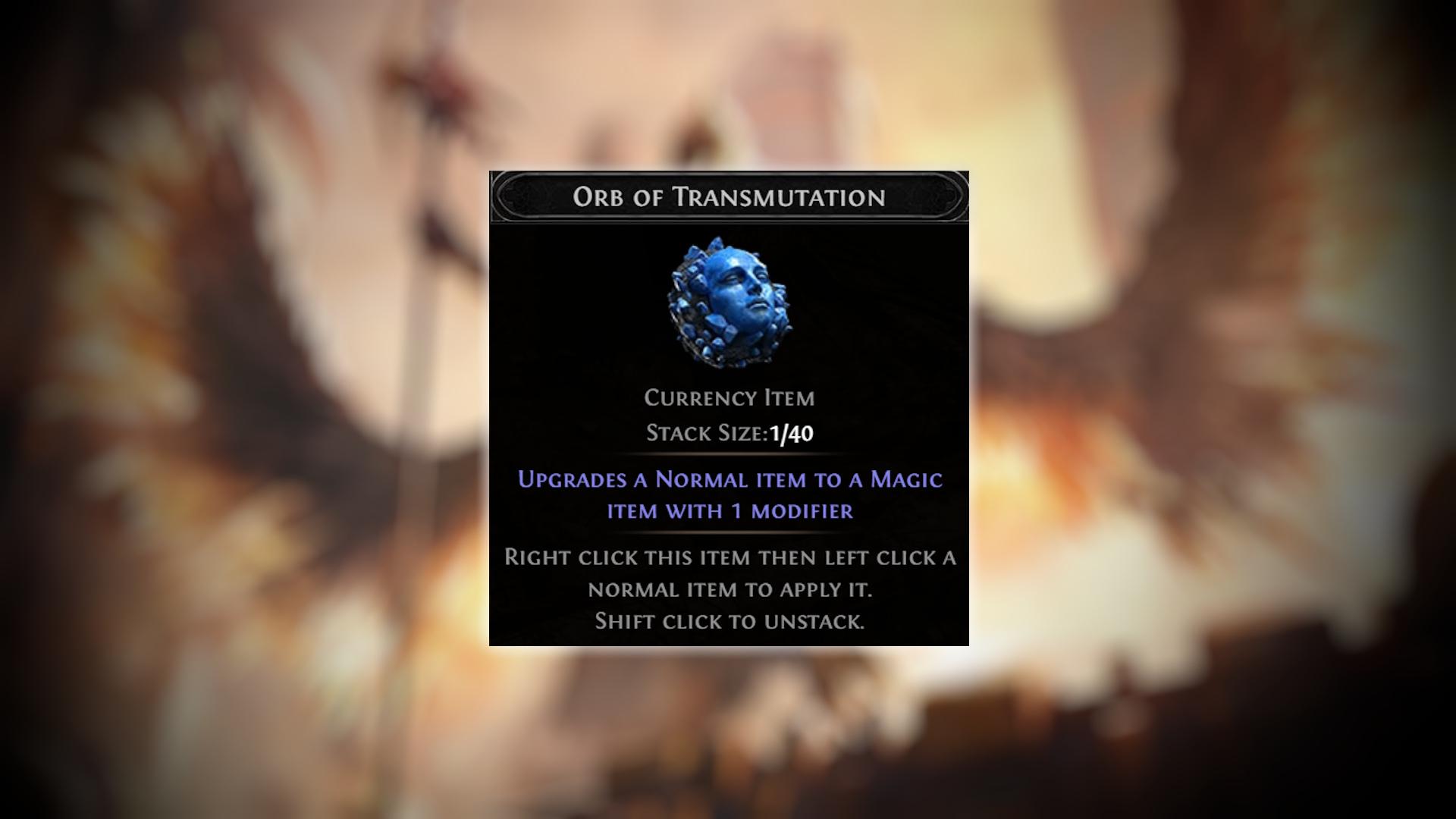
Rarity: Very Common.
Uses: Players primarily use these during the early stages of crafting. They are also very useful early in the campaign to upgrade Normal Item (white) items to more valuable items (blue) with 1 modifier, providing small but helpful boosts. Players can also use them to upgrade Flasks to Magic rarity, which enhances the flasks’ effects.
Don’t hesitate to use these when the opportunity arises. Using them early on can provide much-needed upgrades at a crucial time. So, if you have high-level Flasks and plenty of Orbs of Transmutation, consider spending them to enhance your Flask’s effectiveness!
Orb of Augmentation
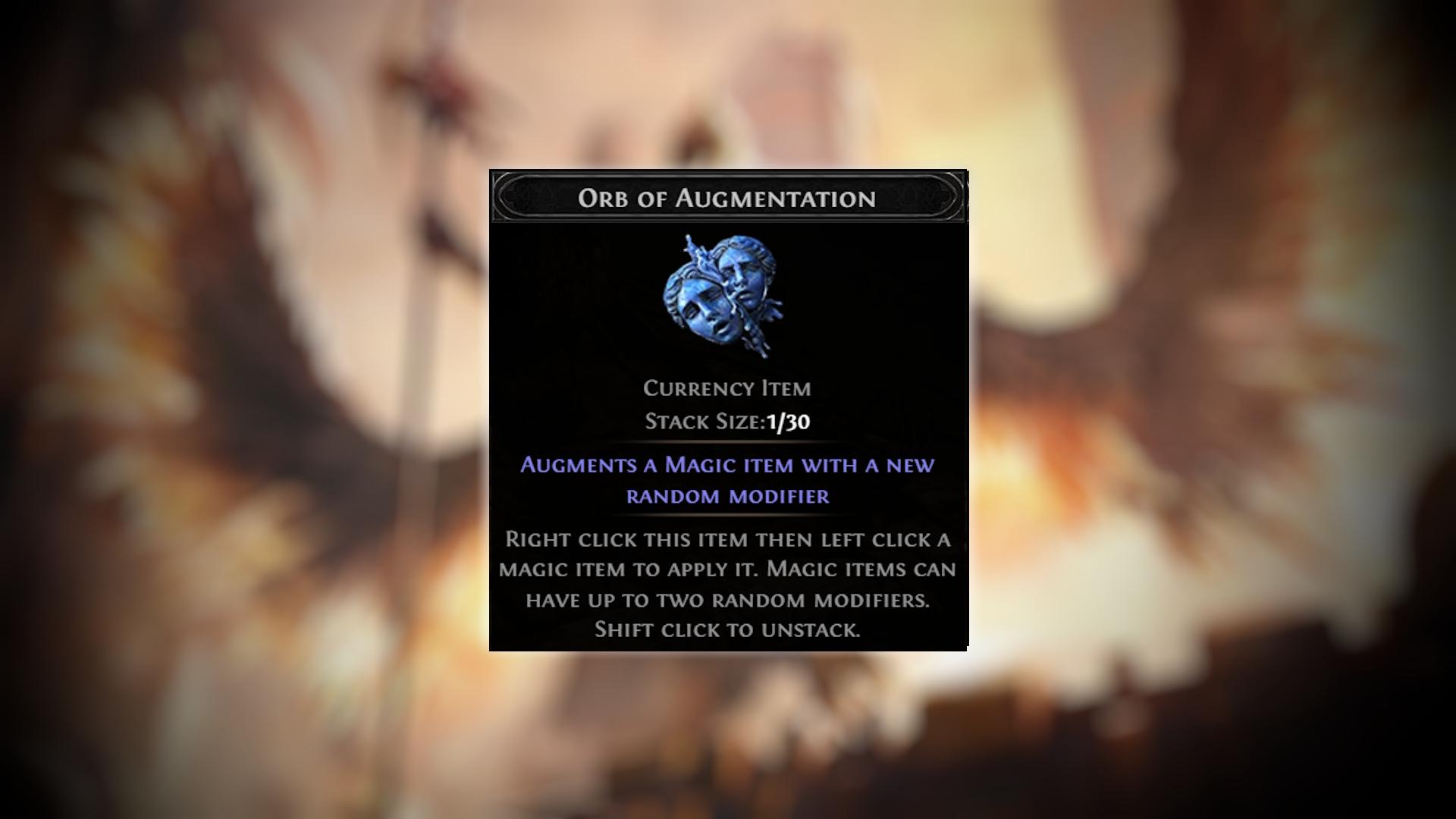
Rarity: Very Common.
Uses: You can use these to add a second modifier to a Magic item after an Orb of Transmutation has already been applied. During the campaign, you can also use them on basic items to apply an advanced upgrade or to add a second modifier to a Flask. In advanced crafting, they are used to add a second rare modifier to an item before moving on to more complex crafting processes.
✏️ A Magic item can only have two modifiers: one prefix and one suffix.
Orb of Alchemy
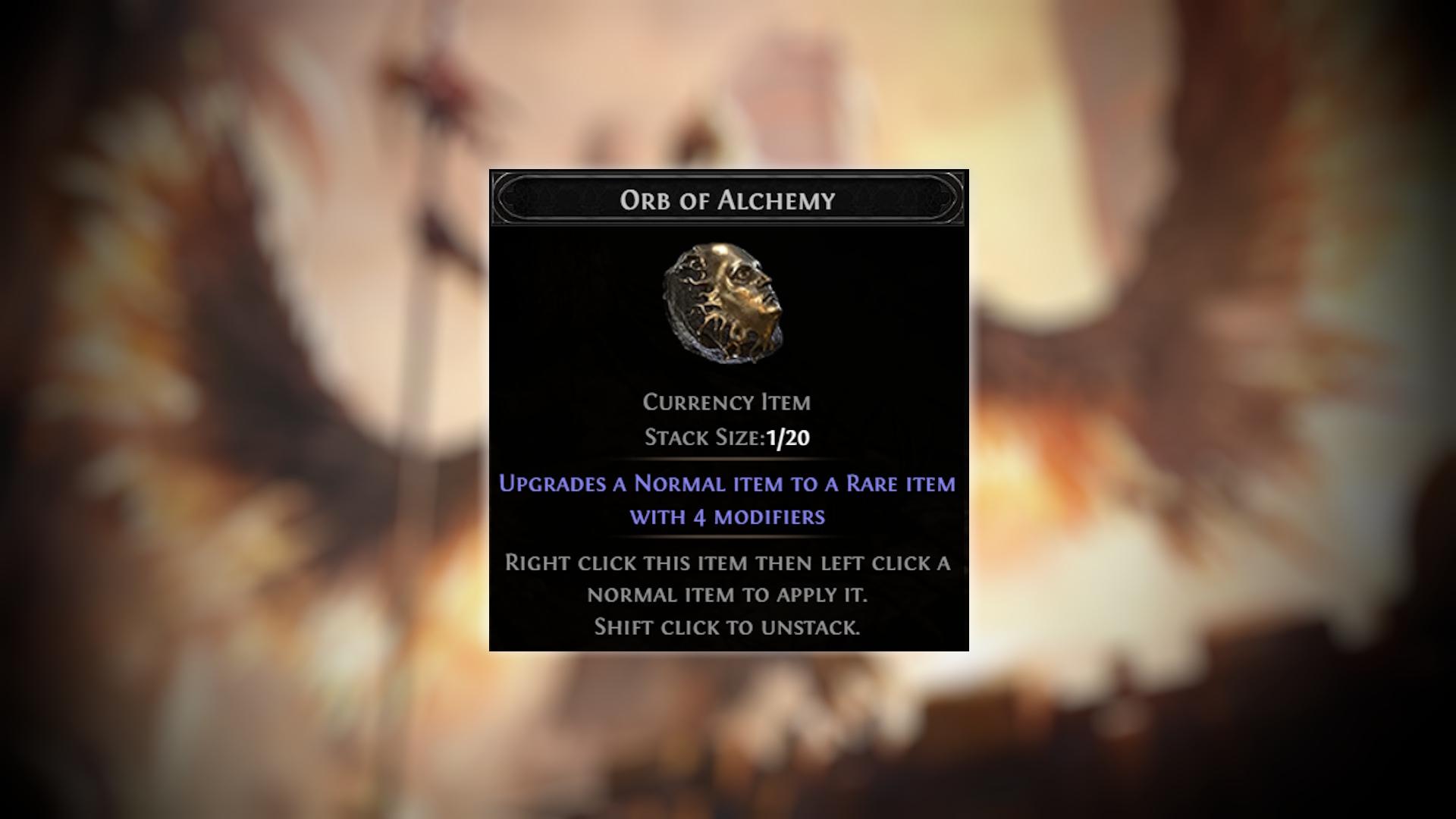
Rarity: Uncommon.
Uses: The primary use of Orbs of Alchemy is to upgrade an item to Rare with 4 modifiers. During the campaign, these orbs can be highly valuable when used on strong item bases. Consider using them on weapons to seek damage upgrades, on boots to try for Increased Movement Speed, and on jewelry or body armor to gain bonuses to Life and Resistance.
Orb of Chance
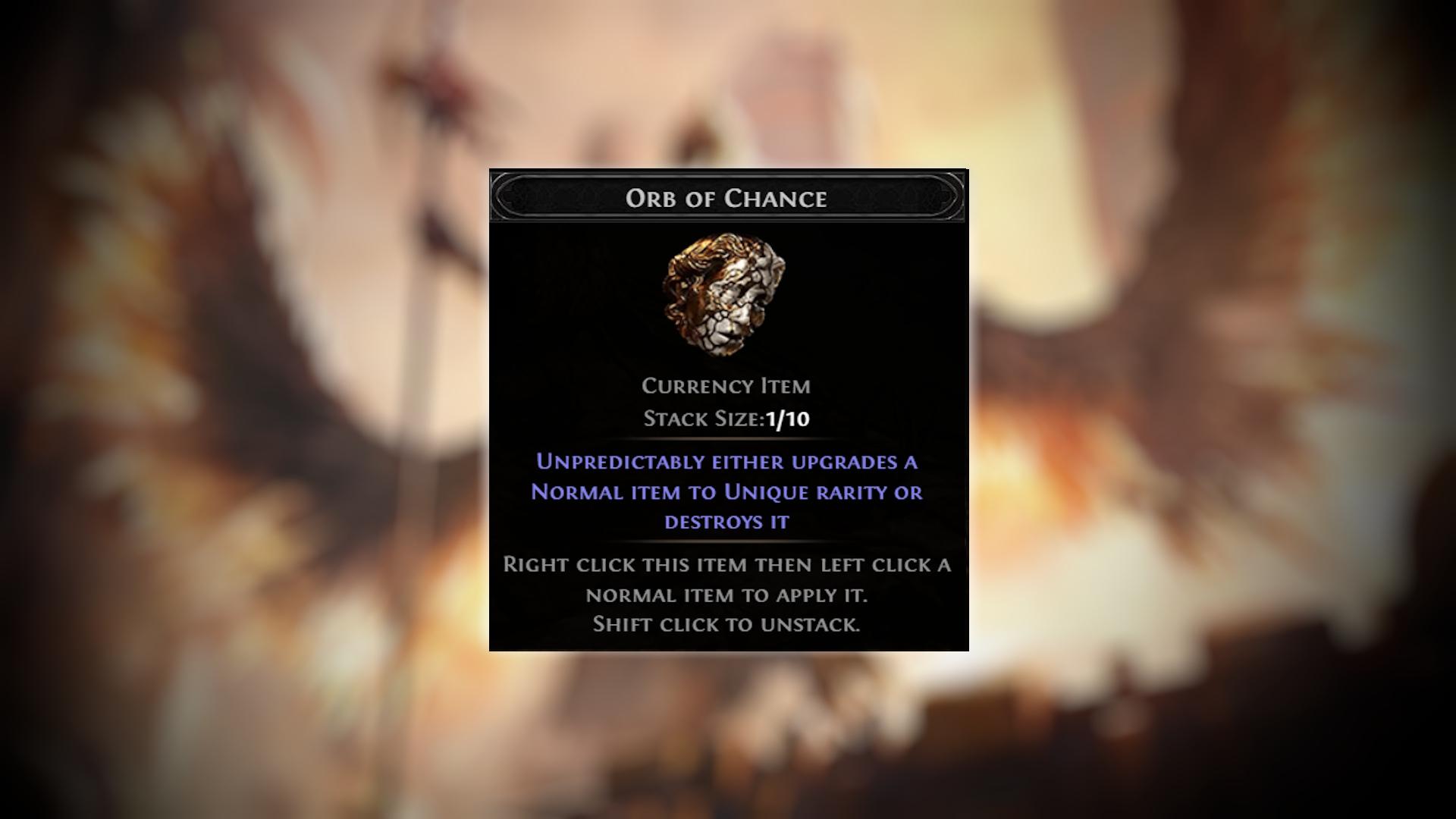
Rarity: Very Rare.
Uses: Orbs of Chance provide the opportunity to upgrade an item into a Unique. Like an Orb of Alchemy, this can sometimes result in a significant power boost for your character, like movement speed. The specific Unique item created depends on the base item used. If you know which Unique item can be created from a particular base item, you have a chance to roll that Unique provided the base item level meets the Unique’s requirements.
Vaal Orb
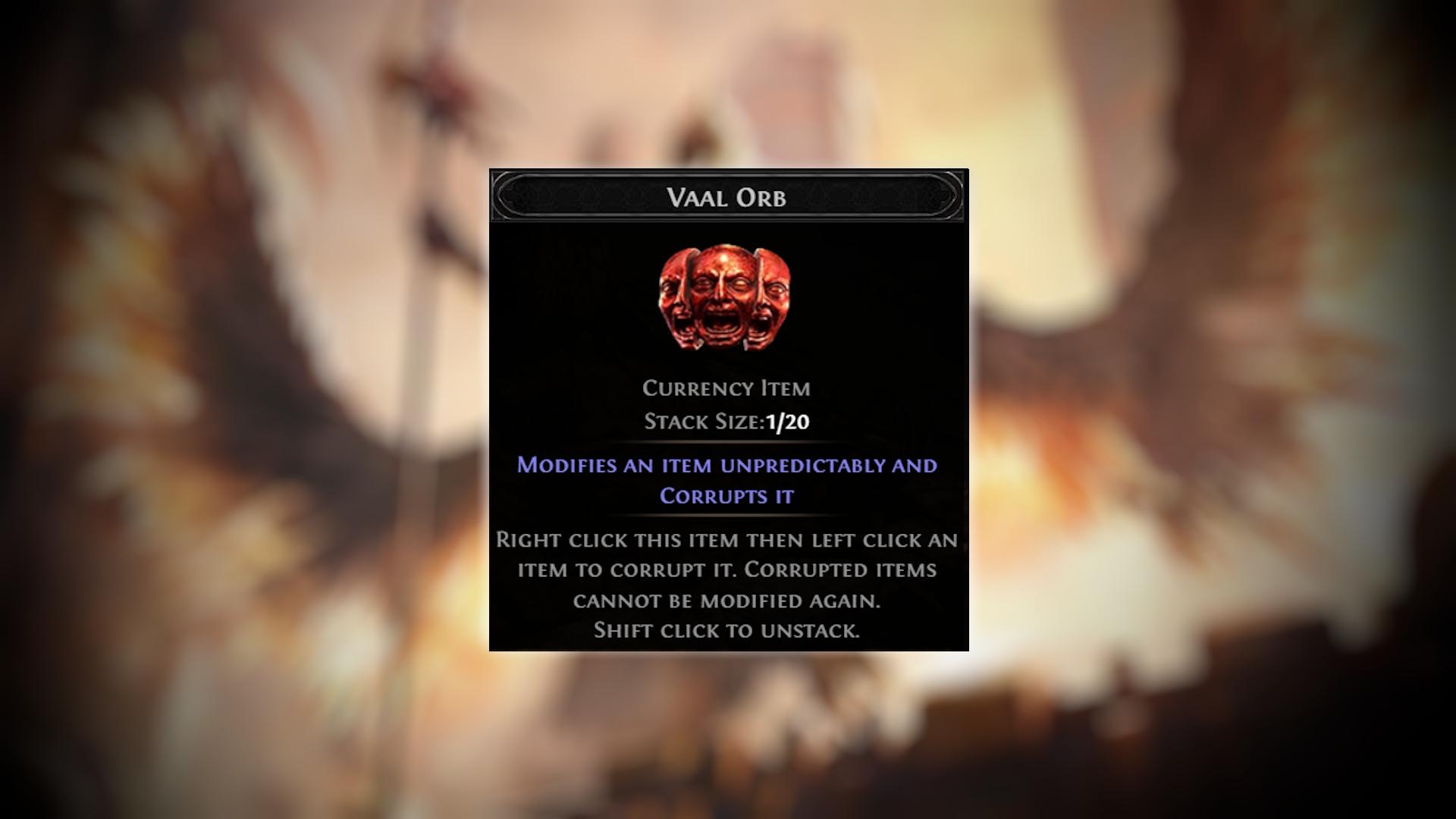
Rarity: Fairly Common.
Uses: You can find Vaal Orbs in Path of Exile 2. This Currency is purely random; you can use it on your items and get corrupted items or super strong item. Vaal Orb also corrupts an item and makes it unmodifiable, meaning you cannot craft, reroll, or change it afterward.
Regal Orb
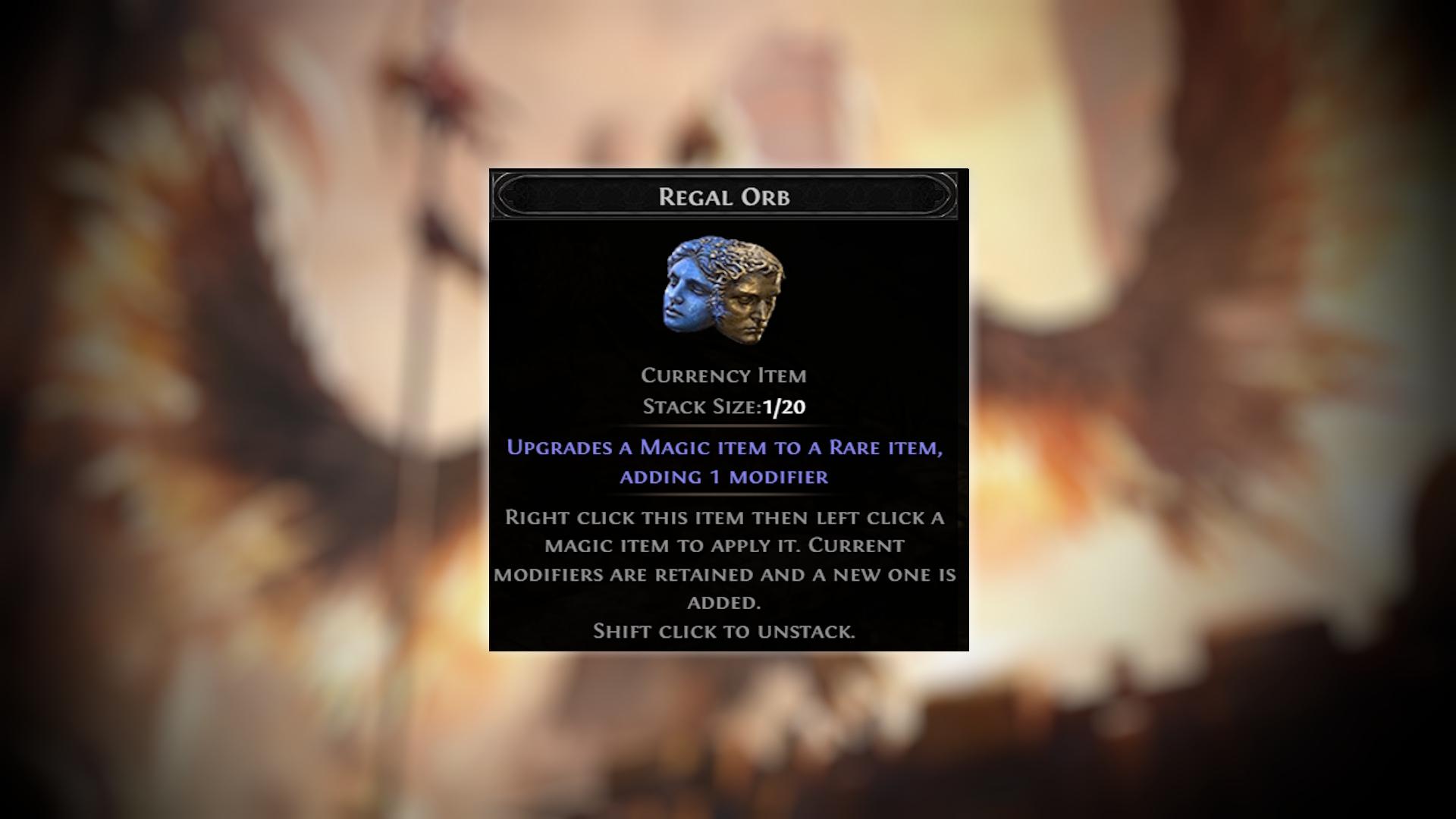
Rarity: Common.
Uses: Regal Orbs have limited and specialized applications. Specifically, you can use them to upgrade a Magic item with up to two modifiers to a Rare item with three modifiers or upgrade a Magic item with one modifier to a Rare item with two modifiers. Because of this, you can utilize Regal Orbs in advanced crafting, where players carefully follow a deliberate process to create highly specific items.
Orb of Annulment
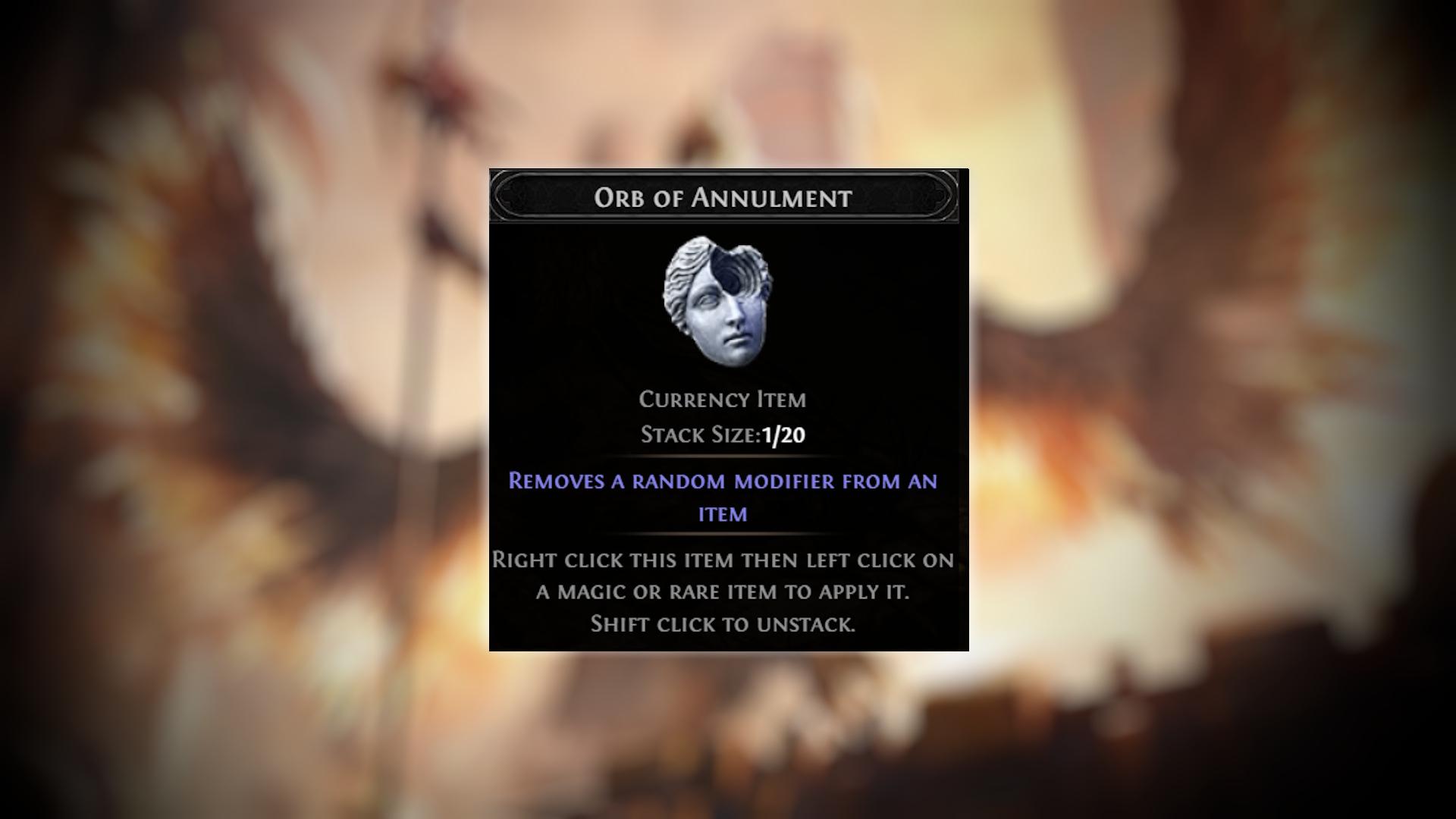
Rarity: Very Rare.
Uses: Orbs of Annulment are a high-end crafting currency used to remove a random modifier from an item. While this may seem counterintuitive to newer players, if used correctly, Orbs of Annulment can be among the most powerful orbs in the game. For example, removing an unwanted modifier can create an opportunity for further refining an item’s potential.
✏️ Keep in mind that Magic items can only have one prefix and one suffix modifier, while Rare items can have a maximum of three prefixes and three suffixes. This creates key opportunities for using Orbs of Annulment to perfect your item as you aim to roll ideal modifiers.
Artificer’s Orb
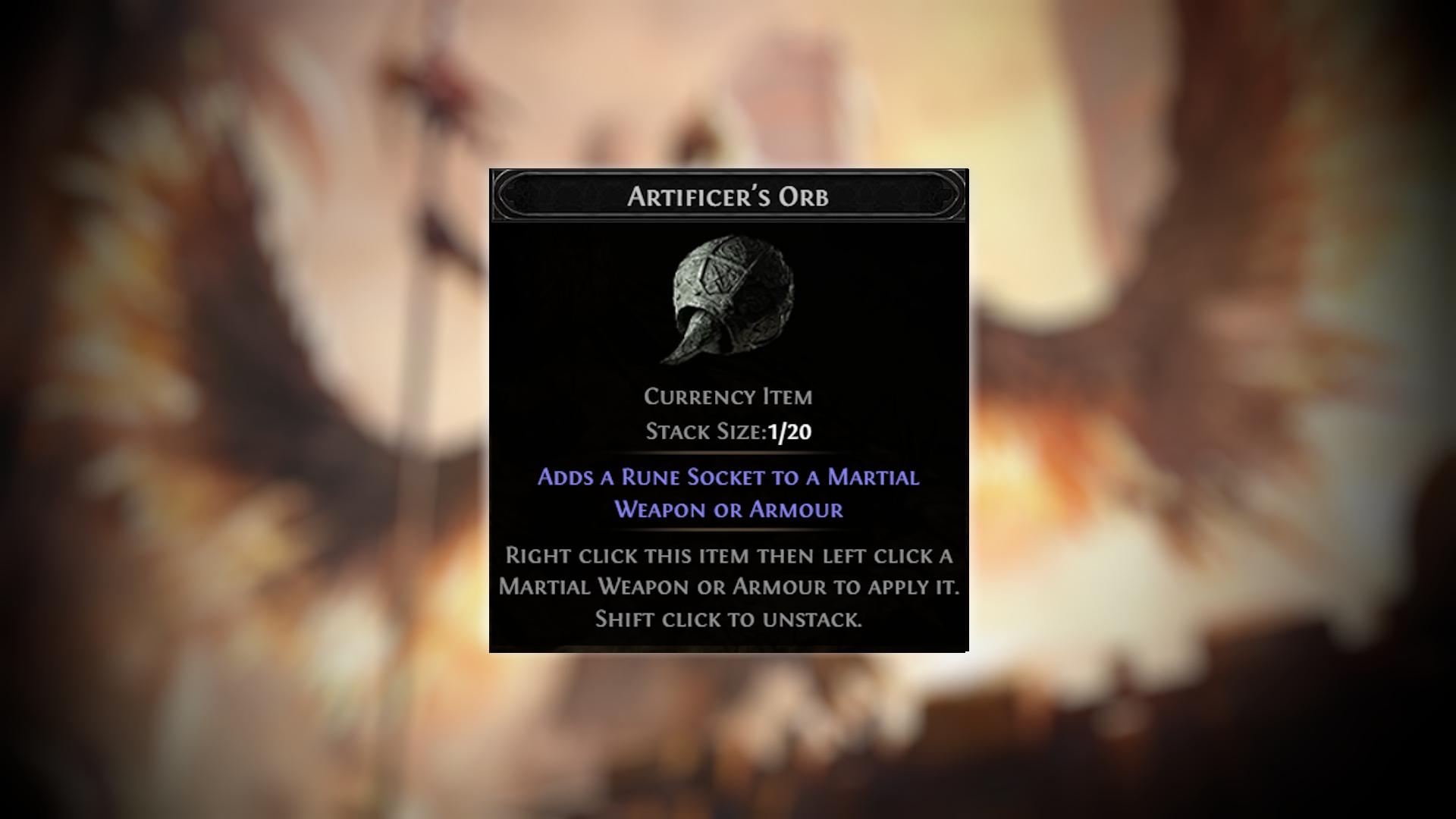
Rarity: Uncommon
Uses: Artificer’s Orb adds a Rune Socket to your Martial Weapon or Armour. You can add max x2 on Two-Handed weapons and Body Armor, and x1 on other equipment. This will further improve your items by adding a socket or a modifier.
The best way to get Artificer’s Orb is to break items with sockets. As a result, you will receive Artificer’s Orbs. When you collect 10 of these shards, you will be able to get Artificer’s Orb.
Exalted Orb
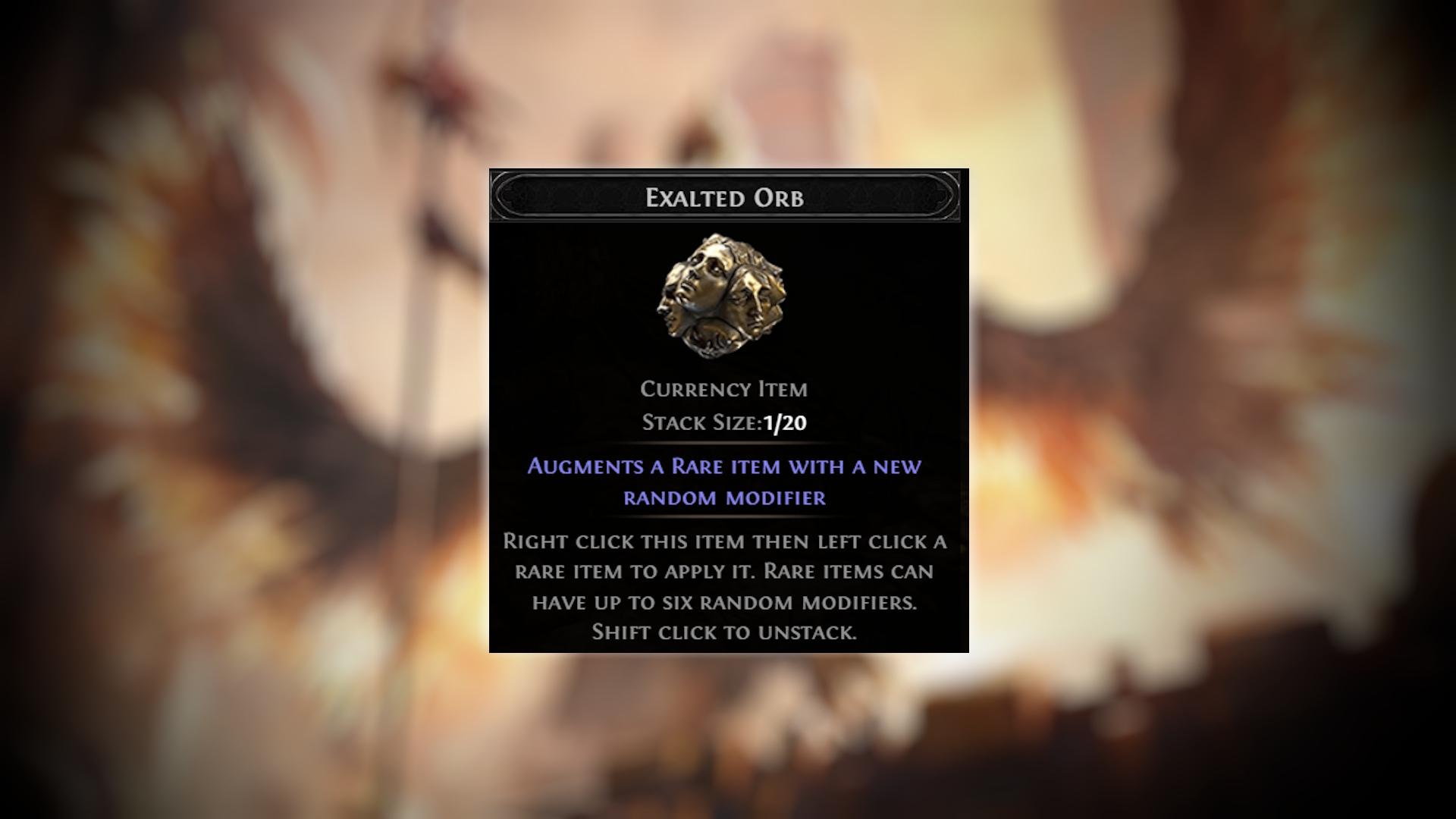
Rarity: Common.
Uses: Exalted Orbs allow you to add modifiers to a Rare item without removing any existing modifiers, unlike Chaos Orbs. These items hold extreme value, so do not use them carelessly, especially on items you don’t plan to keep long-term. Instead, save them for high-end crafts, where experienced players can fully maximize their potential.
In PoE 2 Early Access Exalted Orbs are the main currency at this stage of economic development, as we use them for trading expensive and highly demanded items.
Jeweller’s Orb
Rarity: Rare / Very Rare
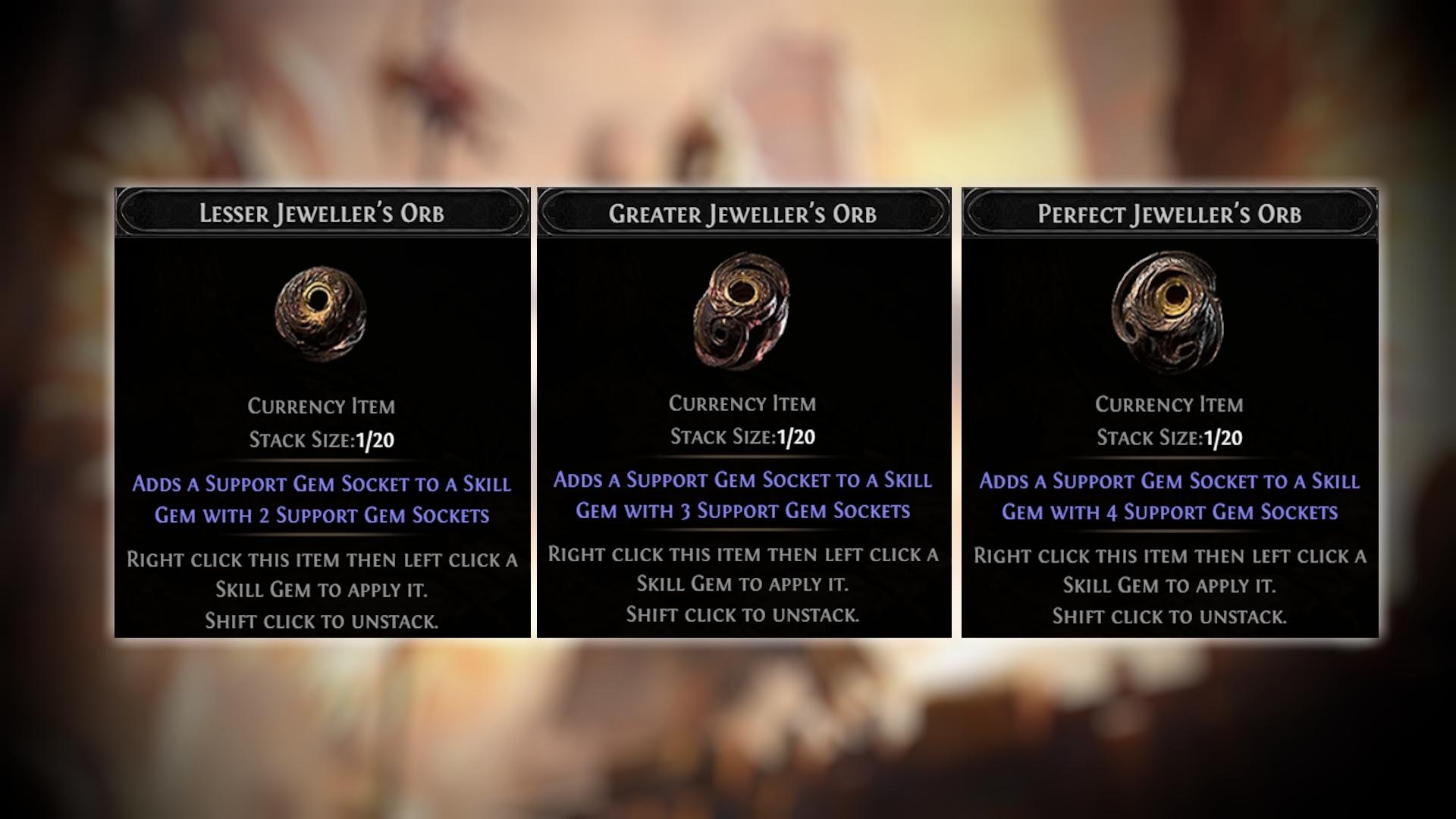
Use: The Jeweller’s Orb is a unique type of currency you’ll encounter as you explore the world of PoE 2. There are several types of Jewel Orbs in Path of Exile 2, each capable of adding more sockets to your gems as you progress through the game. All socket colors in Path of Exile 2 will be white. No more Blue sockets or Green sockets.
- Lesser Jeweller’s Orb: Adds a Support Gem Socket to a Skill Gem with 2 Support Gem Sockets;
- Greater Jeweller’s Orb: Adds a Support Gem Socket to a Skill Gem with 3 Support Gem Sockets;
- Perfect Jeweller’s Orb: Adds a Support Gem Socket to a Skill Gem with 4 Support Gem Sockets.
PoE 2 Other Currencies
However, orbs are not the only form of currency in Path of Exile 2. Scrolls, fragments, and essences exist to give further flexibility to crafting and trading. Of course, each of those currencies has different uses, like rerolling modifiers, upgrading gear, or unlocking special options when you’re crafting. Here we have prepared a list of all secondary currencies in Path of Exile 2:
| Currency | Rarity | Use | Location |
|---|---|---|---|
| Mirror of Kalandra | Very Rare | Creates a mirrored copy of an item | Random drop |
| Hinekora’s Lock | Very Rare | Allows an item to foresee the result of the next Currency item used on it | Random drop |
| Gemcutter’s Prism | Very Rare | Improves the quality of a skill gem | Random drop |
| Arcanist’s Etcher | Uncommon | Improves the quality of a wand, staff, or sceptre | Random drop |
| Armourer’s Scrap | Common | Improves the quality of an armour | Random drop |
| Blacksmith’s Whetstone | Uncommon | Improves the quality of a martial weapon | Random drop |
| Bronze / Silver / Gold Keys | Common | Opens Caches within the Trials | Random droip |
| Gold | Very Common | Can be spent at vendors | Random drop |
| Scroll of Wisdom | Very Common | Identifies an item | Random drop |
| Glassblower’s Bauble | Rare | Improves the quality of a flask | Random drop |
| Verisium Metal | Rare | Currently unknown | Drop from monsters raised by Remnants |
Knowing how to use and farm these secondary currencies can add a lot of value to your PoE 2 currency strategy by adding more ways to maximize profit and enhance your items.
📌 Out of this list, the most important secondary currency in PoE 2 is the Mirror of Kalandra.
Mirror of Kalandra
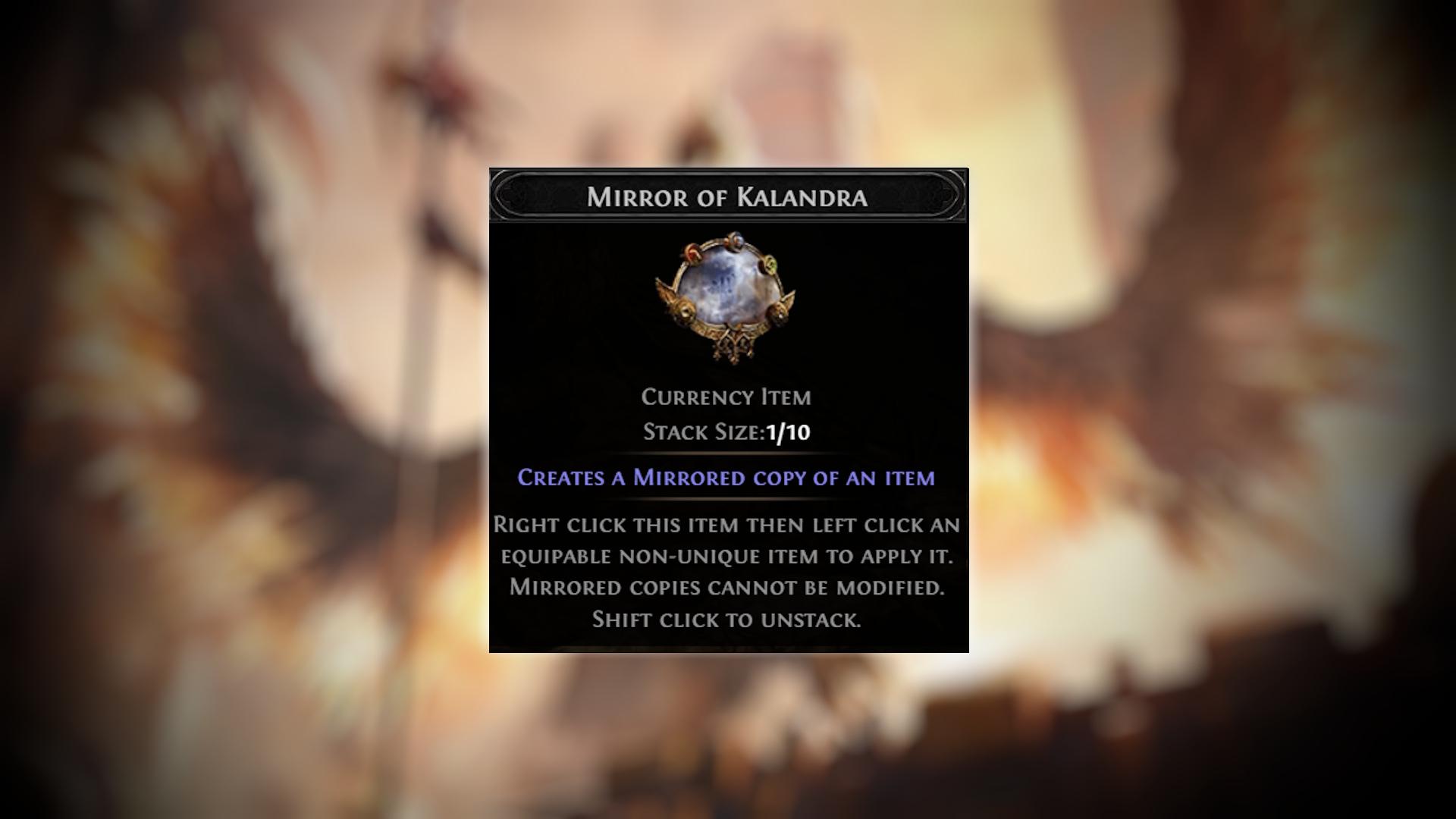
Rarity: Super Rare.
Uses: Mirror of Kalandra in Path of Exile 2 is the most important and rare currency item in the entire game. It is used to create a mirrored copy of a non-unique item, keeping the original item exactly the same while producing an identical duplicate that cannot be modified. Because of its extreme rarity and value, it is mainly used for endgame crafting and trading of top-tier items. Since Mirror of Kalandra is extremely rare, you can save yourself a ton of time by getting as many of them as you need in just a couple of clicks here at Overgear!
Removed PoE 2 Currency
In Path of Exile 2, developers removed or reworked several traditional currency items to match the new mechanics.
- The Orb of Alteration no longer reforges Magic items with new modifiers and has been removed.
- The Orb of Fusing, used for reroll links between sockets, is also gone because PoE 2 now features auto-linked sockets.
- Chromatic Orb, which changed socket colors, has been removed since all sockets are now white. This change eliminates the need for recoloring items.
- The Orb of Scouring, which resets items to Normal rarity, is also missing. Its return is uncertain despite its significance in crafting Path of Exile 1.
- The Orb of Regret has been functionally replaced with using gold to refund points.
The following currencies were removed from the Currency Exchange in Path of Exile 2 patch 0.5.0:
- Black Scythe Artifact;
- Broken Circle Artifact;
- Exotic Coinage;
- Order Artifact;
- Petition Splinter;
- Runic Splinter;
- Sun Artifact.
✏️ Legacy Expedition currency items can still be sold to vendors for Gold after the update.
Orb of Regret
Rarity: Uncommon.
Uses: Orbs of Regret used to be the respec point in the previous game, but no longer are in PoE 2. Using one allowed you to remove a point from the Passive Tree and reassign it elsewhere, which made them especially valuable when you want to make significant changes to your build. However, in PoE 2, this item has been replaced with resetting points for gold.
Path of Exile 2 Currency FAQ
In this section of our guide, we will answer some of the most commonly asked questions about currency in PoE 2.
What Is Currency in Path of Exile 2?
PoE 2 currency is made up of orbs, shards, scrolls, and crafting materials instead of just traditional gold. These items are used for trading, crafting, upgrading gear, and character progression.
What Are the Most Important Currencies in PoE 2?
Chaos Orbs, Divine Orbs, Exalted Orbs, and Vaal Orbs are some of the most valuable currencies in Path of Exile 2. They are widely used for crafting, trading, and improving endgame gear.
How To Farm Currency in Path of Exile 2?
The best ways to farm PoE 2 currency include Delirium, Breach, Ritual, Atlas progression, and selling crafted items. Using loot filters and Atlas passives also helps increase profits.
What Does a Chaos Orb Do in PoE 2?
A Chaos Orb in Path of Exile 2 rerolls a modifier on an item and can replace weak stats with stronger ones. Players often use it for crafting and trading during both leveling and endgame.
What Does a Divine Orb Do in Path of Exile 2?
Divine Orbs in PoE 2 reroll the numerical values of modifiers on an item. They are extremely valuable because they can improve high-end gear stats.
What Does a Vaal Orb Do in PoE 2?
A Vaal Orb in Path of Exile 2 corrupts an item and makes it impossible to modify further. Corruption can add powerful bonuses, but the results are completely random.
What Is Mirror of Kalandra in Path of Exile 2?
Mirror of Kalandra is one of the rarest currencies in the game and creates a mirrored copy of a non-unique item. It is mainly used for duplicating extremely valuable endgame gear.
4.9Path of Exile 2 currency is all about versatility. Which one can be used one way or another: enhancement of gear, alteration of items, properties, or even trading. The secret to maximizing the power and efficiency of your character is to know how to use the currency. Gaining a deeper understanding of the intricacies of each type of PoE 2 currency, in addition to smart crafting, farming, and trading strategies, will surely enable consistent progression throughout the game. Your builds will become that much better with the PoE 2 currency strategy, and you will be better equipped to succeed at challenging endgame content.
