This Monster Hunter Wilds Beginner’s guide covers everything you need to know to start your journey in the Forbidden Lands. You’ll learn how to explore diverse biomes, understand the HUD and UI, master combat mechanics, choose the right weapons and armor, and make the most of crafting. We’ll tell you about Palico and provide you with tips and tricks. You can also find the right weapon for you with our MH Wilds Best Weapons guide.
 4.9
4.9Monster Hunter Wilds Basics
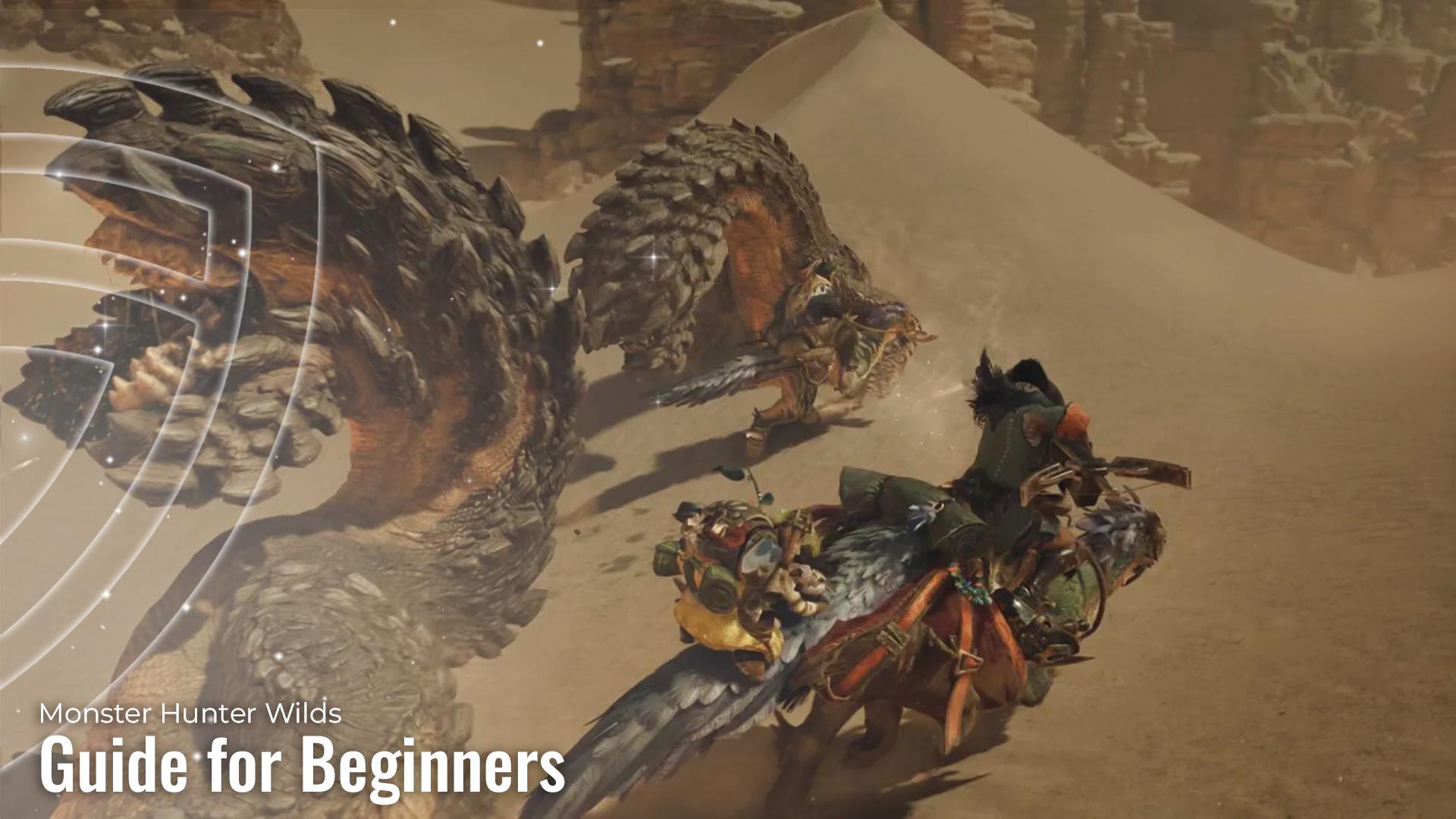
What is Monster Hunter Wilds? Monster Hunter Wilds is a new action game, the launch date of which is set for February 28, 2025. The game calls on players to venture into the Forbidden Lands, a massive region filled with powerful monsters. As a hunter, your role is to hunt, fight, and capture or kill these monsters, using their body parts to forge better weapons and armor. The major focus in the game is set on an open-world experience with fluid transitions between biomes, so you will enjoy numerous discoveries and traveling.
In Monster Hunter Wilds you will face numerous explorations. The game allows you to explore different biomes, and each of them offers a unique challenge and monster living space. You can employ your Seikret mount to swiftly travel around these open areas.
✏️ Tip: Tap the D-pad and your Seikret mount will be there to ride you.
Additionally, players can pick up quests and head to various missions, from the main story missions to sub-hunts and resource collection missions. While completing these quests, you will see plenty of sources to gather raw materials and valuable resources. You can gather material from the environment and defeat monsters in order to craft and improve your gear. If you wish to do what you want in the game, but don’t want to miss the progress, let us complete the Campaign for you and save you tons of time.
Monster Hunter Wilds HUD and UI

Playing Monster Hunter Wilds you’ll notice a wide variety of details on the screen, and for a newbie, it might be difficult to figure out what is what. However, most of the UI features are well-known and pretty common for action RPGs, e.g. HP and stamina bars, mini-map, or current quest sign.
✏️ Tip: Though your hunter and their Palico have health bars, monsters do not! You need to learn to observe their moves and behavior to understand when the beast is weakened or severely wounded and how long the combat will last.
Here’s a detailed overview of Monster Hunter Wilds UI and HUD:
| UI Elements | Position | Description |
|---|---|---|
| Health Gauge | Top Left | A green line shows the HP of your hunter. Once your hero is hit, the line will show the loss of HP. |
| Stamina Gauge | Top Left, under the Health Gauge | A yellow line shows the amount of stamina your hunter has. Stamina is used for running, rolling, and attacking. |
| Sharpness Gauge | Top Left, under the Stamina Gauge | Green sword showing the sharpness of a melee weapon. Every melee attack decreases the sharpness, you need to refill it with a Whetstone. |
| Party Members | Top Left, under your Gauge bars | Shows the HP bar and names of your group members and Palico companion. |
| Nearby Materials | Mid Left | Appears once you are close to a valuable resource. |
| Current Quest | Top Right | Shows your current quest with a Quest Timer. |
| Day Cycle | Bottom Left, next to Mini Map | Provides you information about the current time period, e.g. Morning, Evening, Night. |
| Mini Map | Bottom Left | Shows you gathering nodes, monsters, and the current area. |
| Weather Cycle* | Bottom Left, next to Mini Map and below the Day Cycle | Provides you with information about the current weather, e.g. Plenty, Fallow, Inclemency. |
| Slinger Ammo | Bottom Right, Left to Item Bar | Shows the ammo equipped on your Slinger. |
| Monster Status | Bottom Left, Right to Mini Map | Shows the status of your targeted monster, e.g. Enraged or Capturable. |
| Item Bar | Bottom Right | Shows the item on your bar. You can hold L1 to open the Radial Menu. |
📌 Note: *Some monsters can appear during a certain type of weather, so check the forecast near your mini map.
Monster Hunter Wilds Combat Basics
In Monster Hunter Wilds you will hunt monsters a lot, therefore you should know about the combat basics. Generally, combat is both dynamic and strategic, and to complement your playstyle you can choose among 14 distinct weapon types.
There’s a Focus Mode in the game, which allows hunters to target specific monster parts and inflict precise damage. What’s even more interesting, you can aim into a wound on an enemy for faster kill or more efficient damage dealing.
Evasion and defense are a crucial part of Monster Hunter Wilds combat, as dodging and blocking are essential to surviving aggressive monster attacks. You can evade the attacks via moving or rolling, using a specific weapon (e.g. Insect Glaive, allowing you to get into the air). Playing is much easier when your hunter is high-level. Our team can assist you and Level Up and you’ll enjoy the game even more.
Combat and Evasion Tips
- Press the X Button while moving with a drawn weapon to perform a basic Evade in MH Wilds.
- When using Lances and Gunlances, your dodge roll is replaced with stepping evade.
- When in combat, try to evade in the very last moment before the enemy hits, and roll towards the attack in order not to miss the invulnerability frame.
- Use the Sword & Shield, Lance, Gunlance, Charge Blade, Greatsword, and Heavy Bowgun with a Shield to block enemy attacks.
- Use Focus Mode to aim your hits at the same part of the body and to create a wound.
- Wait for a good timing to perform an Offset Attack — the type of attack when you hit at the same time as the monster, which makes him lose balance and creates an opportunity for you to hit;
- Carry Barrel Bombs with you in case you come across a sleeping monster in a den. If you encounter a sleeping beast, your first attack will deal double damage and wake the monster up. But installing a Barrel Bomb into the den will add some massive damage and make the hunt much faster.
Monster Hunter Wilds Armor and Weapon
In Monster Hunter Wilds your character can carry up to 2 types of weapon, with one of them being primary, and another one secondary weapon. You can choose whatever you like from 14 current weapon types. In our Monster Hunter Wilds Weapon Tier List you can find the best weapons for beginners. Weapons in MH Wilds have various mechanics and finishing moves. Learning the best combo paths for your type of weapon will allow you to end the monster faster. If you want to get a specific Weapon, reach out to our team.
Monster Hunter Wilds armor is the second most important thing for your character after the weapon. There are 5 Armor slots in Monster Hunter Wilds:
- Head;
- Chest;
- Arm;
- Waist;
- Leg.
The armor comes in two ranks: high rank and low rank. You can only unlock high rank armor sets after receiving low rank versions. So when you enter the game for the first time, you’ll be able to dress your hunter in some low rank items.
Monster Hunter Wilds Armor is also customizable, meaning that you can adjust the look of your character to your taste. Customization also allows you to add 2 color schemes for each armor piece.
Monster Hunter Wilds Best Armor for Beginners
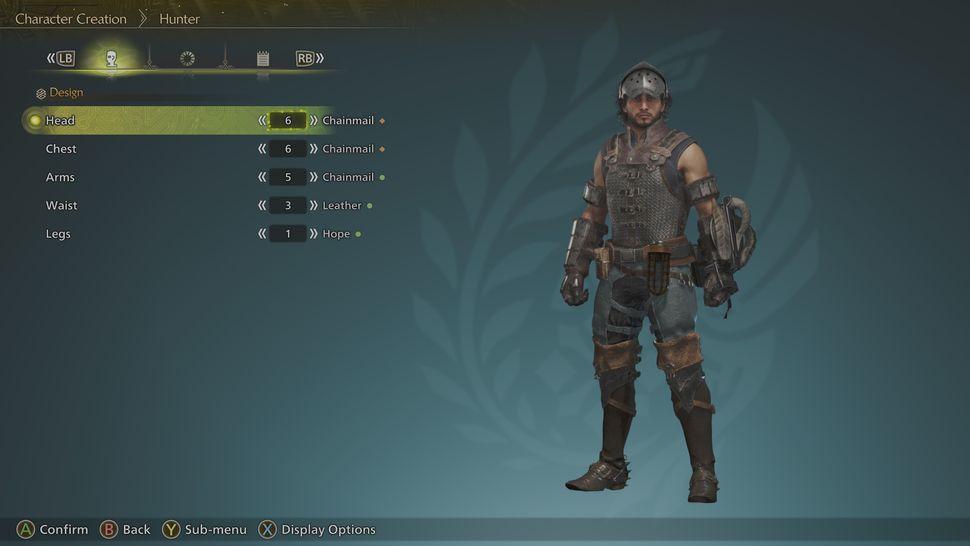
Here’s the most optimal beginner armor set in Monster Hunter Wilds:
- Chainmail Headgear;
- Chainmail Vest;
- Chainmail Gloves;
- Leather Belt;
- Hope Greaves.
This is a beneficial choice for a newbie which will allow you to survive your first days and nights. The set also grants you the following skills: Geologist (level 3), Botanist (level 1), and Divine Blessing (level 1).
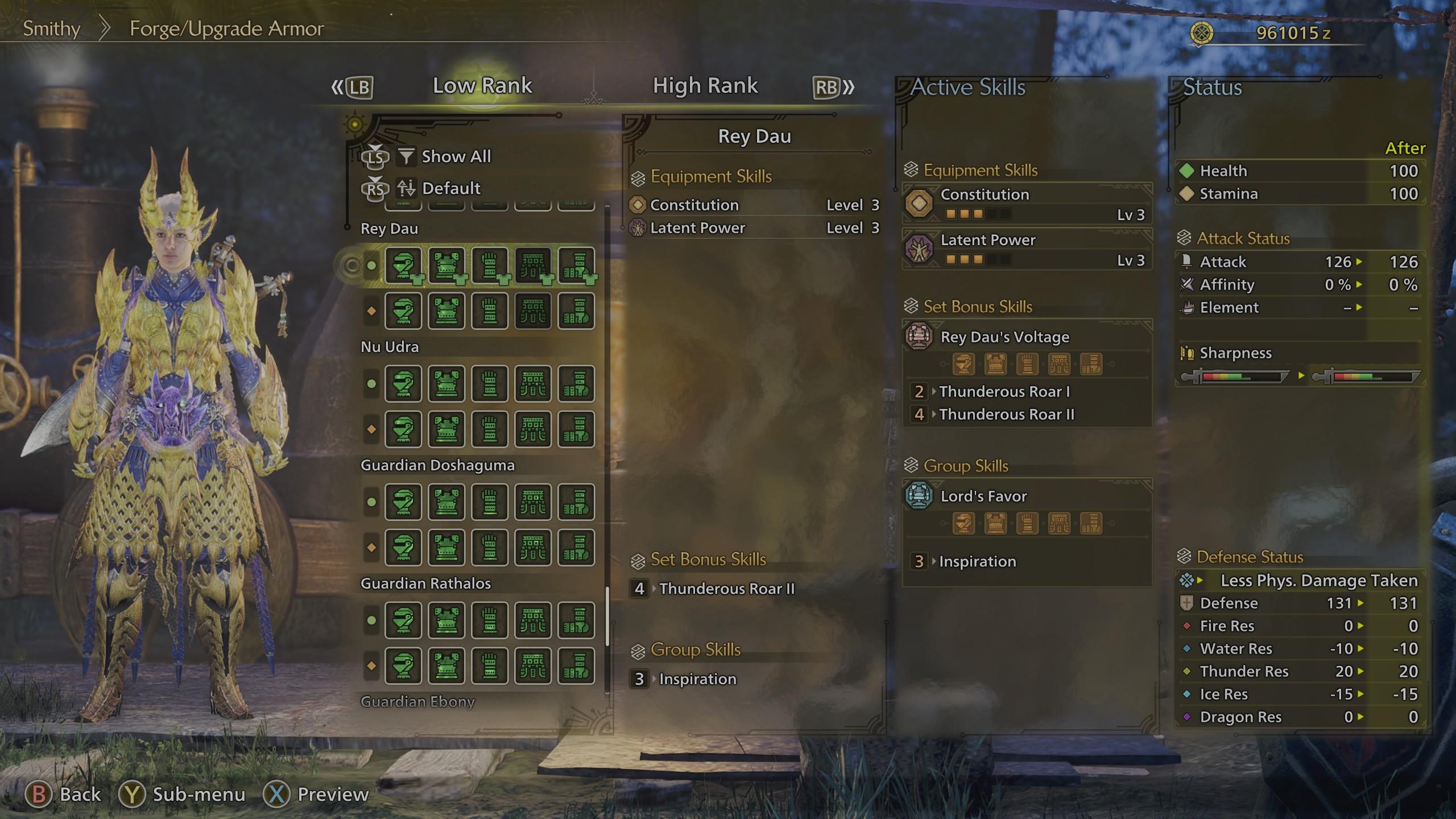
Monster Hunter Wilds Rey Dau
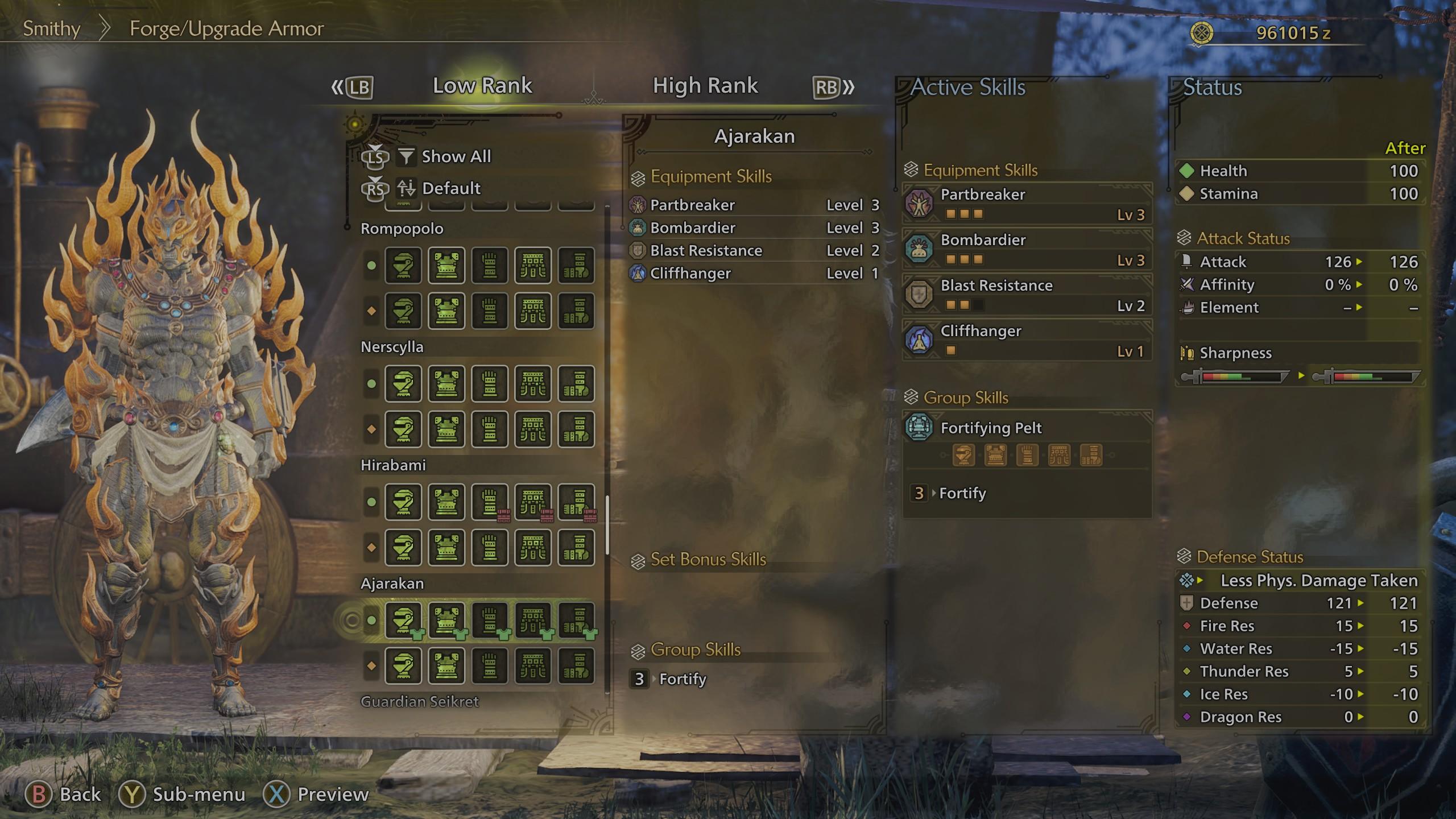
Monster Hunter Wilds Ajarakan
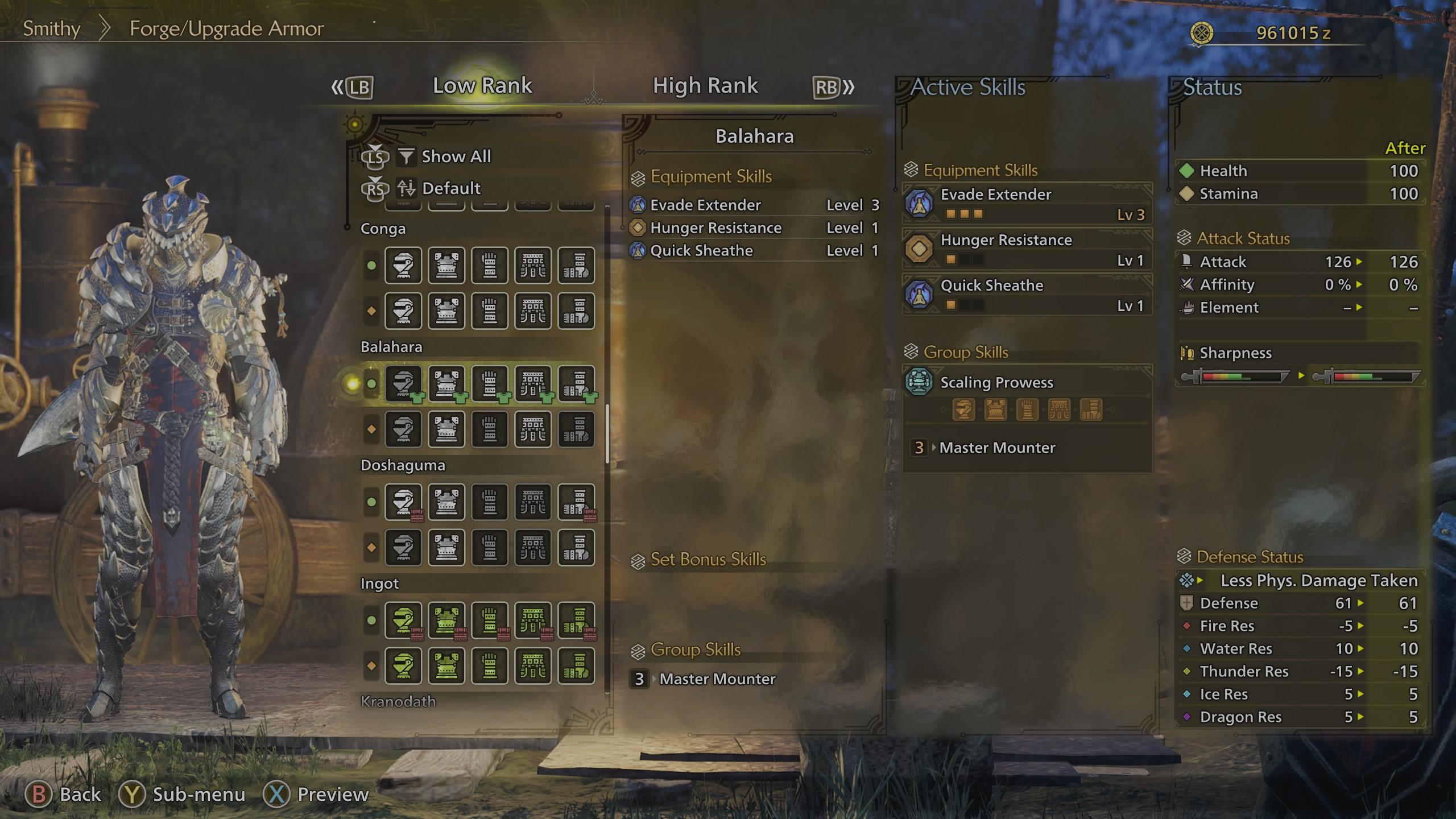
Monster Hunter Wilds Balahara
As you progress through the game, you can come across a few powerful low rank sets. Here’s our list of the Monster Hunter Wilds best low rank sets for beginners:
- Balahara — grants you 3 skills, with Evade Extender level 3, which will significantly enhance your ability to dodge and survive;
- Ajarakan — offers you 4 skills, including Partbreaker level 3, which will increase the wound break damage;
- Rey Dau — offers two level 3 skills, with Latent Power that reduces stamina consumption and increases affinity, allowing you to use weapons that require tons of stamina.
Any Armor Set can be easily acquired with the assistance of our professional players, who already know the best ways to get it fast and easily.
Monster Hunter Wilds Crafting
To obtain the best armor in Monster Hunter Wilds, you’ll need to learn how to craft. Gemma at the Smithy in the base camp is proficient in this sphere, so you should talk to her. The dialogue gives you an option ‘Forge/upgrade equipment’.
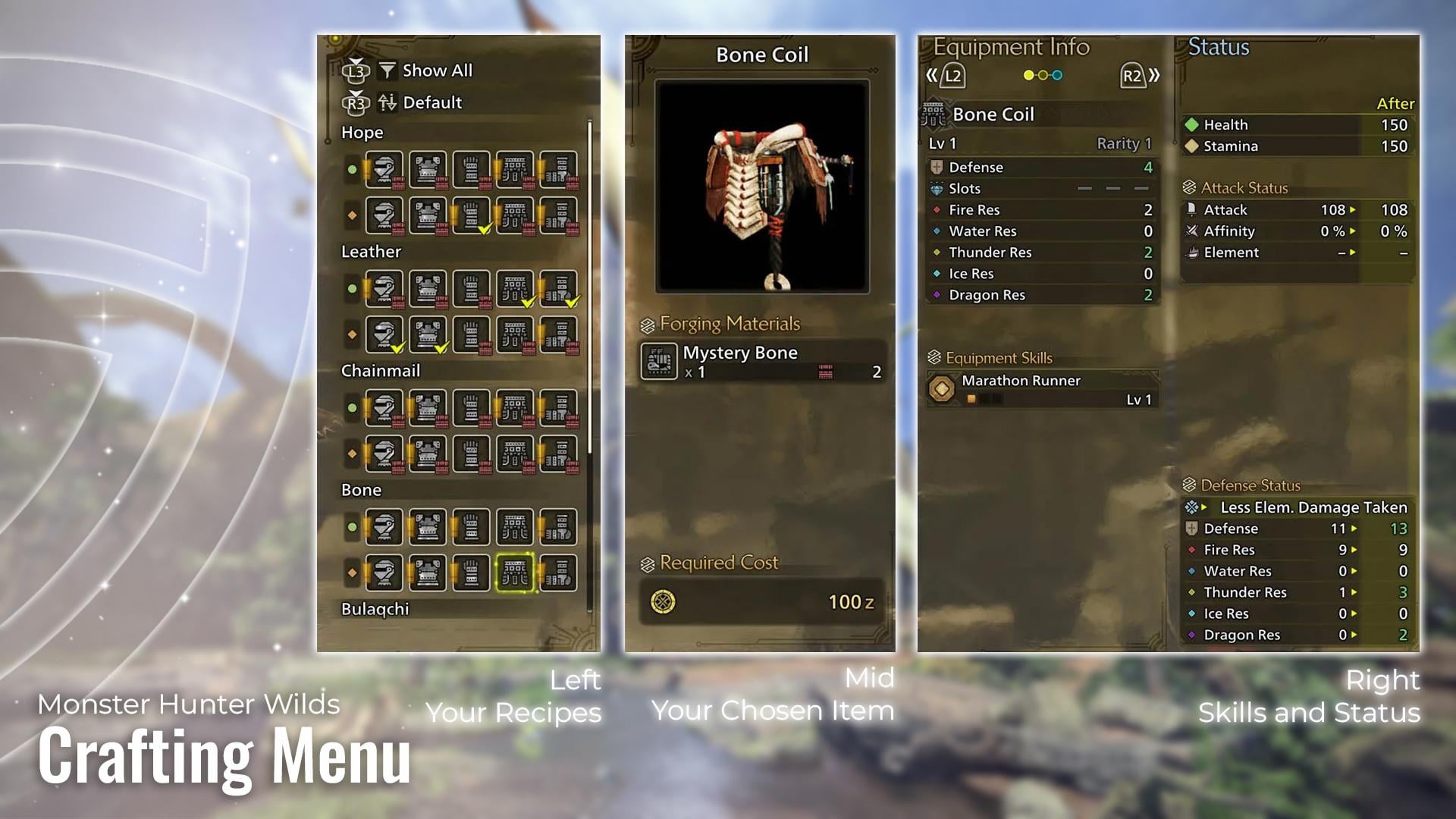
In the menu that’ll open once you select the ‘Forge/upgrade equipment’ option, you’ll see quite a lot of windows and buttons of all kinds. Here’s what to look for in the Crafting menu:
- On the left, you can find a full list of armor sets that you’ve discovered;
- In the middle, you’ll see the information about the piece of gear you want to craft: cost, materials, and appearance;
- On the right, you’ll see the information about your hunter’s armor and the effects that it’ll provide on equipping.
✏️ Tip: If you like a particular item, but there are no materials to craft it, you can add it to your ‘Wishlist’. Once you have enough resources, you’ll be notified that you can start crafting.
Monster Hunter Wilds Skills
Monster Hunter Wilds Skills can be separated into 3 major categories:
- Equipment skills — skills that come with your equipped gear/weapon;
- Group skills — are activated when you equip armor pieces that have the same Group skill;
- Set Bonus skills — are activated when you equip armor pieces that belong to one armor set.
Equipment Skills is the largest group counting hundreds of skills that come with all sorts of equipment in Monster Hunter Wilds. Therefore, when you pick up a new piece of gear, analyze its skills to decide whether it’s a suitable option.
Group skills are interesting in a way that equipping 3 pieces of gear with a matching group skill will unlock this group skill. For instance, equipping 3 items with the Imparted Wisdom group skill will grant you access to a Forager’s Luck skill.
Set Bonus skills work pretty straightforward. They give you certain effects, empower your equipment skills, allow you to deal more damage, etc. To obtain a set bonus skill you need to gather a set. The effect granted by the set depends on the amount of equipped set pieces: there are a 2-piece bonus and a 4-piece bonus.
Monster Hunter Wilds Palico Companion
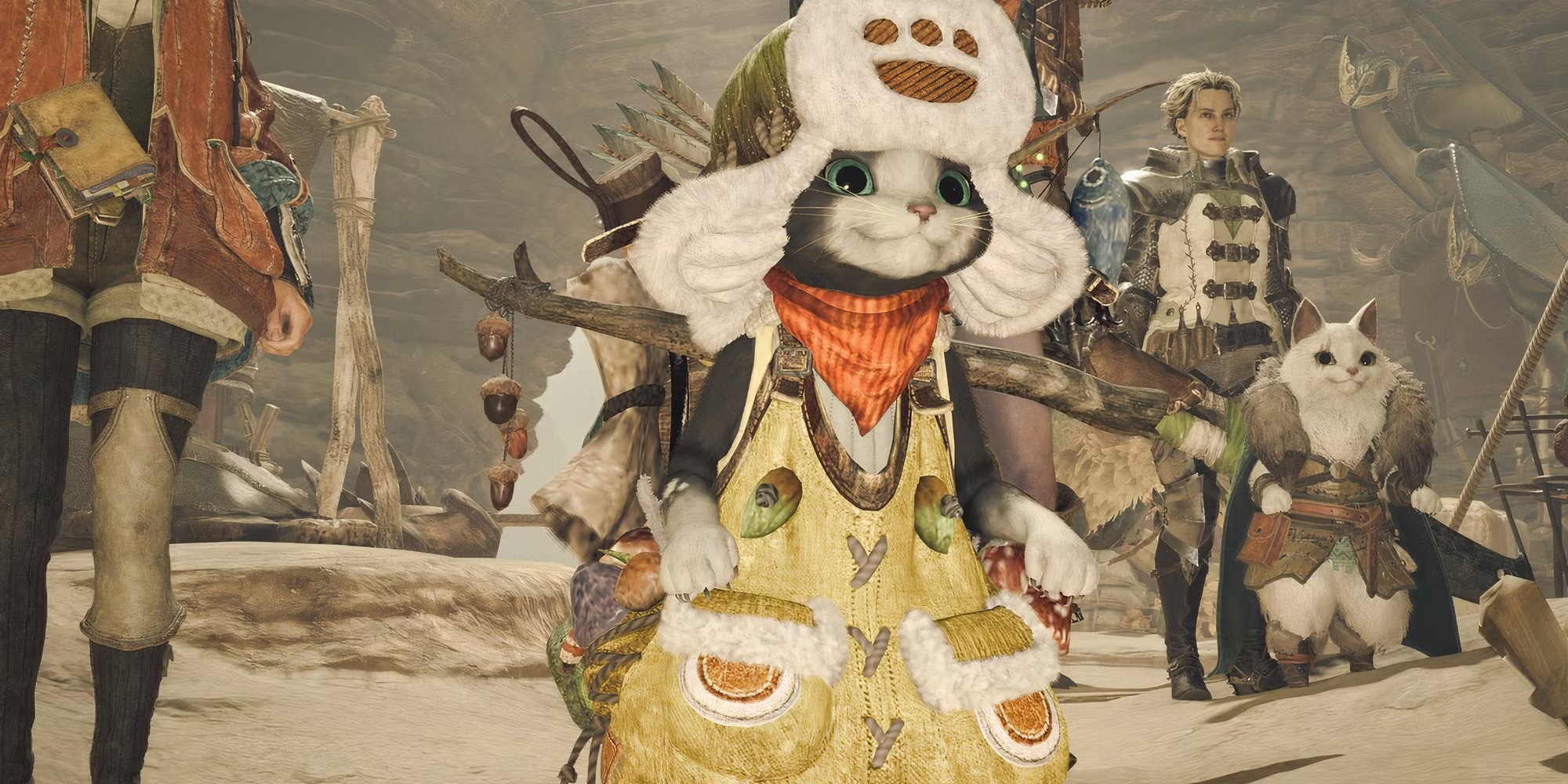
There are a lot of monsters and threats in Monster Hunter Wilds, and it’s quite dangerous to walk there alone. Therefore, you’ll have Palico by your side — a cat-like companion with their own equipment and skills. Palicoes can attack your target using 7 skills to support you in combat. Additionally, they have their own armor and weapons. You can loot the armor pieces, or craft them at Gemma’s smithy in a base camp.
In Monster Hunter Wilds Palico is able to speak the same language as the Hunter. But if you prefer your Palico to have its classic voice, you can switch this feature on.
Monster Hunter Wilds Palico Tips and Tricks
Palico is a unique companion with their own behaviors. Depending on the behavior type, they will prioritize different targets:
- Large Only: Palico only targets large monsters;
- Large First: Palico prioritizes large monsters;
- Balanced: Palico attacks all kinds of monsters;
- Small First: Palico attacks small monsters;
- Small Only: Palico only targets small monsters.
Also, Monster Hunter Wilds Palico has 5 specializations:
- Healer: This Palico focuses on recovery moves and can heal hunters;
- Assist: Palico-assistant can place traps to help you in combat;
- Fight: This Palico is a tough fighter focusing primarily on hitting a target monster;
- Bombardier: Palico can handle large bombs and help you blow things up;
- Gathering: This Palico helps you to gather resources; they can sniff out valuables and detect valuable materials.
Monster Hunter Wilds Locations
The Forbidden Lands world in Monster Hunter Wilds is huge, you will get to explore 5 ecosystems, 6 base camps, and 6 settlements, experience 3 types of weather, and set up camps wherever you like. It is important to understand the system of Monster Hunter Wilds locations if you want to hunt specific monsters or gather certain resources.
Monster Hunter Wilds Ecosystems
Monster Hunter Wilds Ecosystems are areas representing different biomes: from rainforests to deserts, and more. In each ecosystem, you’ll find specific monsters, which inhabit the area. Some monsters can be found in 2 or more biomes.
| Ecosystem | Weather | Large Monsters | Small Monsters |
|---|---|---|---|
 Windward Plains Windward Plains | Sandtide | Balahara, Doshaguma, Chatacabra, Rey Dau, Quematrice, Gypceros, Rathian, Arkveld | Baunos, Bulaqchi, Ceratonoth, Dalthydon, Gajios, Talioth |
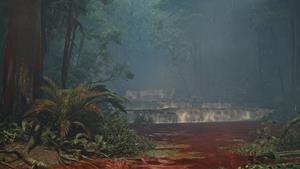 Scarlet Forest Scarlet Forest | Downpour | Lala Barina, Uth Duna, Congalala, Doshaguma, Yian Kut-Ku, Rathian, Arkveld, Rathalos | Dalthydon, Gajios, Harpios, Conga, Vespoid, Piragill |
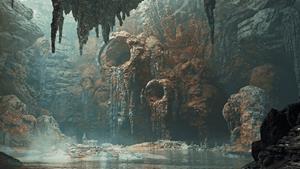 Oilwell Basin Oilwell Basin | Firespring | Rompopolo, Ajarakan, Nerscylla, Nu Udra, Gypceros, Rathian, Arkveld, Gravios, Rathalos | Gelidron, Kranodath, Harpios, Vespoid |
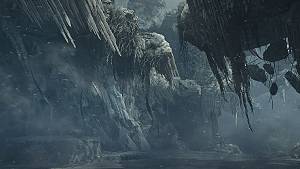 Iceshard Cliffs Iceshard Cliffs | Frostwinds | Jin Dahaad, Hirabami, Nerscylla, Yian Kut-Ku, Gypceros, Arkveld, Gore Magala, Blangonga | Vespoid, Nerscylla, Hatchling, Comaqchi, Blango, Porkeplume, Rafma |
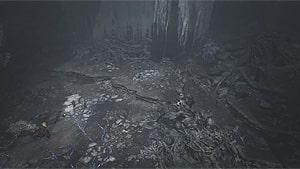 Ruins of Wyveria Ruins of Wyveria | Wyvern’s Stirring | Quematrice, Lala Barina, Congalala, Doshaguma, Nerscylla, Hirabami, Ajarakan, Xu Wu, Guardian Ebony, Odogaron, Guardian Rathalos, Guardian Doshaguma, Guardian Arkveld, Gypceros, Guardian Fulgur Anjanath, Arkveld, Gravios, Rathalos | Vespoid, Porkeplume, Rafma, Guardian Seikret |
Monster Hunter Wilds Base Camps
Base camps in MH Wilds can be found in almost every ecosystem. You can guess the location of a camp by its name. In base camps hunters can trade, craft, train, meet different NPCs, and rest.
| Camp | Facilities | NPCs |
|---|---|---|
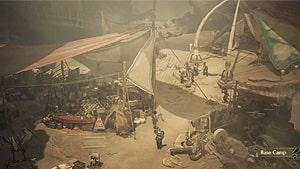 Plains Base Camp Plains Base Camp | Tent, Smithy, Training Area, Squad Information, Counter, Support Desk, Ingredient Center, Provisions Stockpile, Quest Counter, Pop-up Camp Meowster, Village Intermediary, Support Ship | Gemma, Felicita, Conut, Alma, Nata, Jack, Tom, Ferdinand, Athos, Rosso, Dareel, Tek, Samin, Santiago |
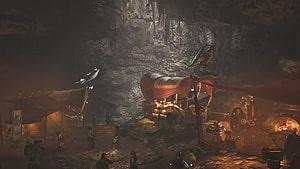 Forest Base Camp Forest Base Camp | Tent, Provisions Stockpile, Support Desk, Quest Counter, Smithy, Village Intermediary | Olivia, Erik, Werner, Ralph, Gin, Gemma, Alma, Nata, Athos, Griffin |
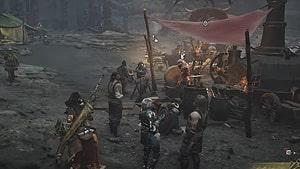 Basin Base Camp Basin Base Camp | Tent, Quest Counter, Smithy, Smelting Foundry, Item Trade, Provisions Stockpile, Support Desk, Village Intermediary | Alma, Gemma, Nata, Roqul, Dogard, Aida, Yabran, Hazel, Olivia, Erik, Werner, Arthur, Tursa, Sole, Lavala, Teno |
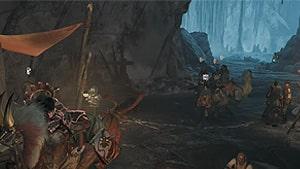 Cliffs Base Camp Cliffs Base Camp | Tent, Item Trade, Quest Counter, Smithy, Support Desk, Village Intermediary | Rove, Sekka, Alma, Gemma, Werner, Olivia, Pista, Nata |
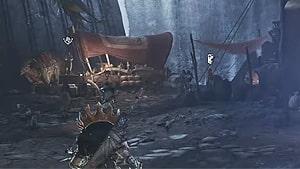 Wyveria Base Camp Wyveria Base Camp | Tent, Smithy, Quest Counter, Provisions Stockpile, Support Desk, Village Intermediary | Gemma, Alma, Lemuel, Tanea, Nata, Werner |
Monster Hunter Wilds Settlements
Settlements in Monster Hunts Wilds differ from base camps — there are fewer facilities in there, and instead of trades and artisans you’ll find tribes and farmers.
| Camp | Facilities | NPCs |
|---|---|---|
 Kunafa, Windsong Village Kunafa, Windsong Village | Quest Counter, Item Trade, Meal Invitation, Seikret Customization | Elder Ela, Y’sai, Nona, Old Nana, Nata, Kilama, Amone, Garano, Roza, Moniya, Nemmo, Zatoh |
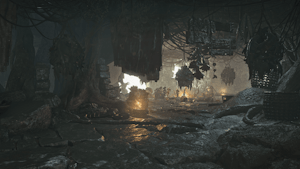 Wudwud Hideout Wudwud Hideout | Item Trade, Material Retrieval, Quest Counter | Musharpeye, Gawdygog, Plumpeach, Alma, Bangard, Bearbelly |
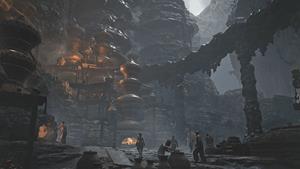 Azuz, the Everforge Azuz, the Everforge | Item Trade | Aida, Dogard, Yabran, Maki |
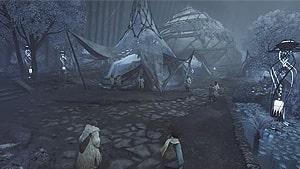 Sild, the Keepers’ Vigil Sild, the Keepers’ Vigil | Item Trade, Quest Counter, Smithy, Support Desk, Village Intermediary, Material Retrieval | Lauruel, Tasheen, Ren, Alma, Nata, Gemma, Rysher, Velre, Saris |
 Suja Peaks of Accord Suja Peaks of Accord | Tent, Smithy, Quest Counter, Material Retrieval, Village Intermediary, Melding Pot | Fabius, The Allhearken, Cobb, Alma, Gemma, Nata, Tetsuzan, Apar, Rex, Vio |
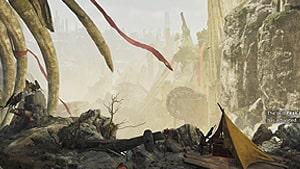 Wounded Hollow Wounded Hollow | Quest Counter, Makeshift Camp | Alma |
Monster Hunter Wilds Tips and Tricks
Our list of tips and tricks essentially answers the most important question for every beginner hunter: what to do first in Monster Hunter Wilds?
- Choose an easy weapon and train with it. MH Wilds’ weapons vary in difficulty. For beginners, Dual Blades, Long Sword, Hammer, or Great Sword are good choices. Avoid complex ones like the Insect Glaive. Consult the tutorial in the pause menu and train in the training field prior to hunting.
- Get familiar with the UI and Item Menu ASAP. Quick item use, especially curing, is about survival. The interface is delicate, so practice it between quests to master quick item selection.
- Get used to sheathing your weapon often. Here’s a trick: with a weapon in your hands you can’t do some actions, e.g. use other items or sprint. Some particular weapon types even change your dodge roll when in hands. So in a majority of situations, even mid-combat, you’d like to sheath your weapon.
- Remember to set up Pop-Up Camps. The camps are used to travel fast and safely or to get items from your storage. Additionally, camps allow you to switch weapons, so it’s a must.
- Eat regularly for buffs. Meal effects last for 30 minutes. Max stamina and health decrease as time goes on. Eating replenishes them and can give buffs. Use Rations and Steak in combat or cook full meals at your tent or BBQ for better effects.
- Check your supplies before each hunt. Potions and items are not automatically restocked. Gather Herbs and resources, buy materials at base camp, or restore from your tent item storage. Grab free things from the guild supply box while the quest starts (D-Pad left).
- Learn how to use the weaknesses of monsters efficiently. Monsters drop materials for crafting, but you’ll need multiple hunts to get a full set. After defeating a monster once, check the Large Monster Guide for its weaknesses and hit zones. Use our full monster list and weaknesses table for deeper strategy insights.
- Get used to hunting length. Battles are 10–40 minutes based on skill and monster strength. No health bar, but watch for signs of wounds, broken limbs, and flight. Each hunt is an investment, but the reward is well worth it!
4.9With this Monster Hunter Wilds Beginner’s guide, you now have a solid foundation for surviving and thriving in the Forbidden Lands. From combat strategies to gear selection, our tips and tricks set you up for successful hunts. Keep exploring, upgrading your equipment, and refining your skills — there’s always a new challenge waiting in Monster Hunter Wilds.
